Fertility treatment asks a lot of you — injections, early-morning monitoring appointments, unpredictable mood swings, and a level of physical and emotional load most people underestimate going in.
It quietly asks something of your pet’s routine too.
Not in a dramatic way — just in a handful of specific spots worth planning for now, before you’re in the middle of a cycle.
The lifting restriction most people don’t expect
After an egg retrieval specifically, patients are commonly advised to avoid heavy lifting and strenuous exercise for about one to two weeks afterward, due to real physical risks like ovarian hyperstimulation and torsion — not a vague precaution, but a genuine recovery guideline tied to enlarged ovaries needing time to settle back down. That includes the litter box, a bag of dog food, or a large dog jumping up on you, all things that don’t usually register as “lifting” until you’re specifically told to avoid it. Your own clinic’s guidance is the one that matters most here, since protocols and individual risk vary, but it’s worth assuming the restriction will run longer than a single day off, not shorter. Worth having a plan for who covers that during recovery, arranged before the retrieval itself rather than scrambled together the day after.
General timelines vary by clinic and individual response — TRIO Fertility’s guidance on exercise after retrieval is a useful plain-language reference, but always defer to your own care team’s instructions.
If you don’t have an obvious backup person
Not everyone has a partner, roommate, or nearby family member to lean on during a retrieval week, and that’s worth planning around rather than hoping it works out. A neighbor you trust with a spare key, a paid dog walker booked for just that stretch, or a pet-sitting app for a handful of visits are all reasonable stand-ins — the goal isn’t a permanent arrangement, just coverage for the specific days when lifting and long walks are off the table. Even one scheduled visit on retrieval day itself, just to handle the litter box or let the dog out, takes something off a list that’s already full.
Why your energy for walks may dip, and why that’s fine
Injection fatigue and hormone shifts are real, physical, and not something willpower solves. A shorter walk or a skipped session here and there isn’t something to feel guilty about, even if your dog seems disappointed about it. A backup dog walker or family member for the toughest days — retrieval week, a hard appointment, a difficult result — takes the pressure off in exactly the moments you have the least capacity to absorb it yourself. On the days a full walk isn’t happening, a slower sniff-focused stroll around the block, a food puzzle, or a few extra minutes of scent games indoors can cover a dog’s need for mental engagement even when the physical distance is shorter than usual.
A Little Support for Every Stage
Helpful checklists, guides, and resources to make each stage a little easier.
The part that’s genuinely good for you
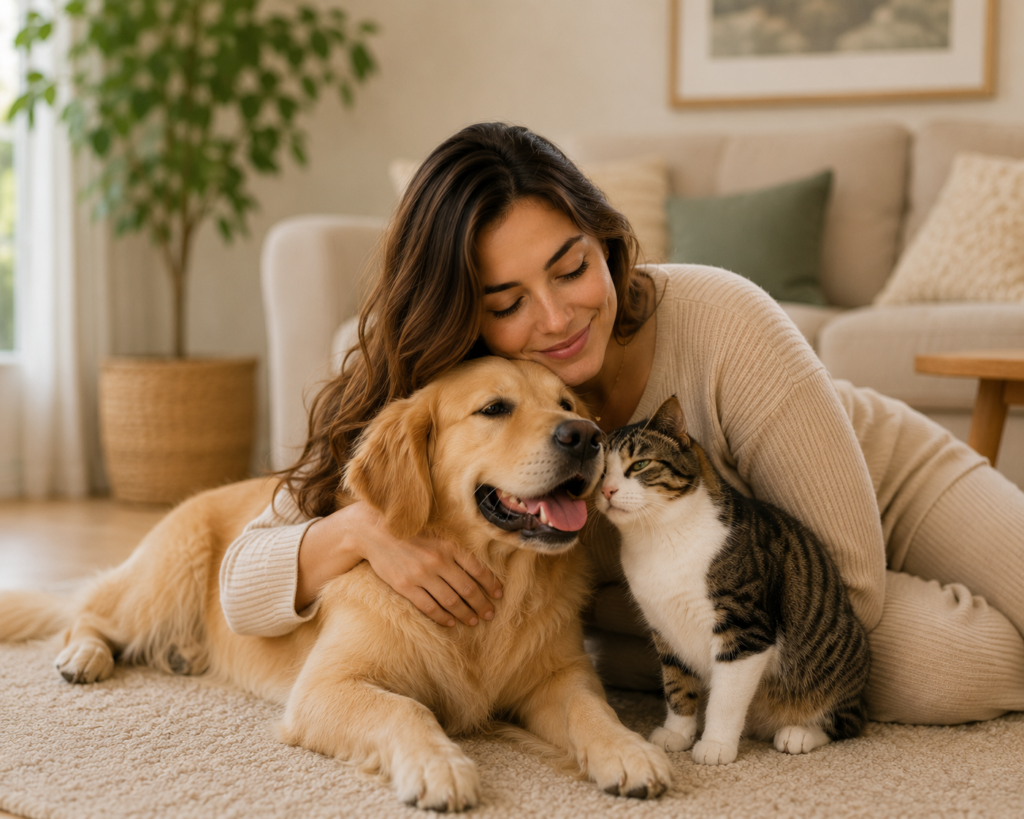
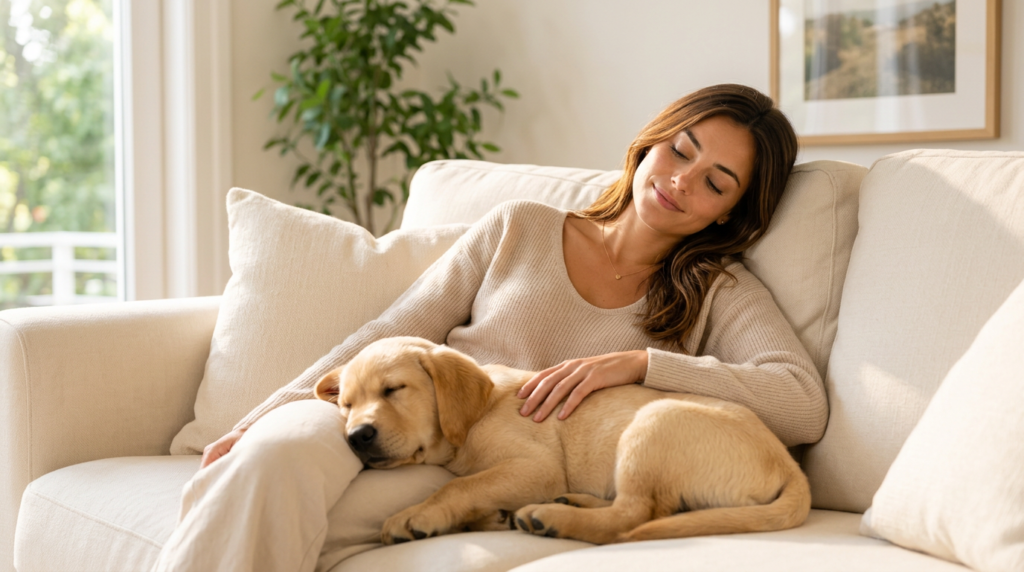
Pets showing up as a real source of comfort during fertility treatment isn’t just anecdotal — it’s a consistent theme in how people describe getting through the hardest parts of this process, the two-week wait especially. There’s something specific about a pet’s routine-driven presence, needing to be walked or fed regardless of how the morning’s news landed, that gives structure to days that otherwise have very little.
What tends to catch people off guard
It’s rarely the big, obvious moments that trip people up — most people know a retrieval day itself will be disruptive. It’s the smaller, cumulative stretch afterward: several days of reduced energy, a pet who’s used to a longer walk suddenly getting a shorter one repeatedly, or a partner quietly picking up more of the pet care without either of you having actually talked about it as a plan. Naming this out loud ahead of time, even briefly, tends to prevent the resentment that unspoken extra effort can build up over a cycle or two.
A simple way to plan for it in advance
Before a cycle starts, it’s worth a short, specific conversation: who’s the backup for lifting and longer walks during the two weeks around a retrieval, and is there a family member or friend who could take on litter box duty or an extra dog-walking shift if needed. Having a name attached to the plan, rather than a vague “we’ll figure it out,” removes one more thing to solve in the moment when your energy is already going toward the treatment itself.
Where this lands: the one concrete thing to plan for is who handles lifting after a retrieval. Everything else is just permission to ease up when you need to, and to let your pet’s steady presence be part of what gets you through it, not one more thing on the list to manage perfectly.
Wondering whether the stress of this stretch is rubbing off on your pet too? Here’s what the research actually says.
We'd love to
hear from you.
Have a question, a tricky moment you're navigating, or a story worth sharing? This is a two-way street — we're always listening.
💌 Get in Touch