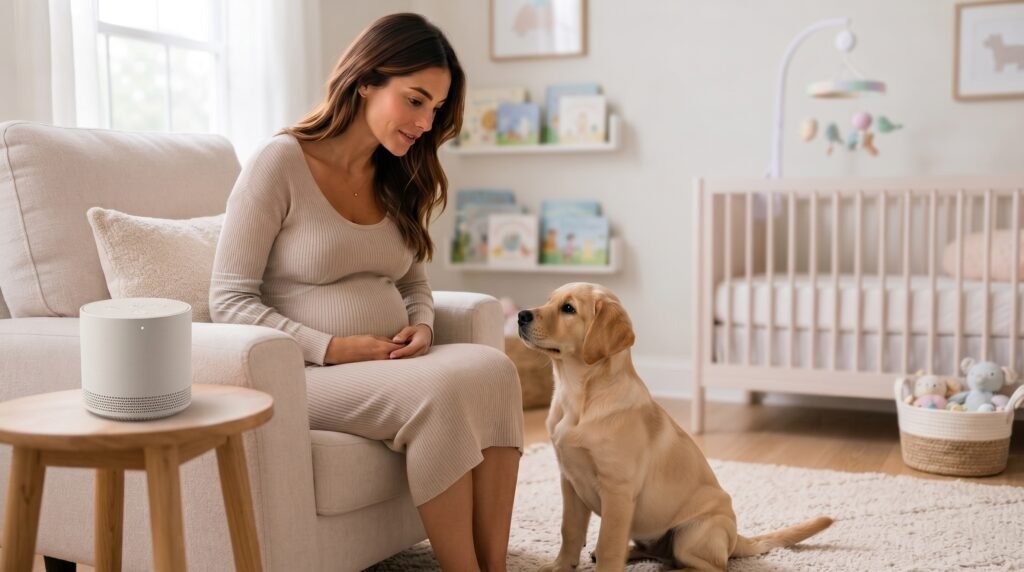
Once the nursery’s actually running, it comes with its own soundtrack — a white noise machine, a humidifier’s hum, a monitor’s occasional static.
None of it is loud. All of it is new, and dogs and cats notice new sound far more than we tend to give them credit for.
Before the specifics:
- This isn’t about a single alarming sound. It’s several small, continuous ones your pet hasn’t lived with before.
- Nothing here needs to happen right before the baby arrives. Earlier is easier, same as everything else on this list.
- Most pets adjust to background sound quickly once it becomes constant rather than sudden.
What’s in this guide
- Run the white noise machine before you need it
- Do the same with the humidifier
- Let your pet hear the monitor’s actual sounds
- Keep the volume low at first
1. Run the white noise machine before you actually need it.
Turning it on for short stretches during the day, weeks before the due date, lets it fade into the background the same way any other constant household sound eventually does. Introducing it for the first time the same week as a newborn means it’s competing for your pet’s attention with everything else that’s new.
2. Do the same with the humidifier, if you’re using one.
The hum itself is usually a non-issue, but the visible mist can genuinely spook a curious pet the first time they notice it. A few supervised sessions where your pet can investigate it from a comfortable distance usually resolves this quickly.
A Little Support for Every Stage
Helpful checklists, guides, and resources to make each stage a little easier.
3. Let your pet hear the monitor’s actual sounds, not just silence.
Most monitors have some baseline static or occasional beep even without an active alert. If you have the unit already, running it in an empty room for short stretches beforehand means your pet’s already heard it before it’s paired with an actual crying baby.
4. Keep the volume low at first, and raise it gradually.
This applies across all of the above — starting quiet and increasing over days or weeks works better than jumping straight to normal operating volume, for the same reason gradual introductions work better than sudden ones everywhere else on this list.
Where this lands: none of these sounds are especially loud or alarming on their own — the goal is just making sure none of them are brand new on the same day everything else about the household changes too.
Sound is just one piece of getting a dog ready for the nursery — here’s the fuller list of what actually needs to change.
We'd love to
hear from you.
Have a question, a tricky moment you're navigating, or a story worth sharing? This is a two-way street — we're always listening.
💌 Get in Touch