
You’ve got a five-year-old Labrador who’s seen it all, and a newer rescue who still startles at the doorbell.
One combined checklist doesn’t work for two very different pets.
Give each one their own short list, built around where they actually are today.
Why physical space matters more than people expect
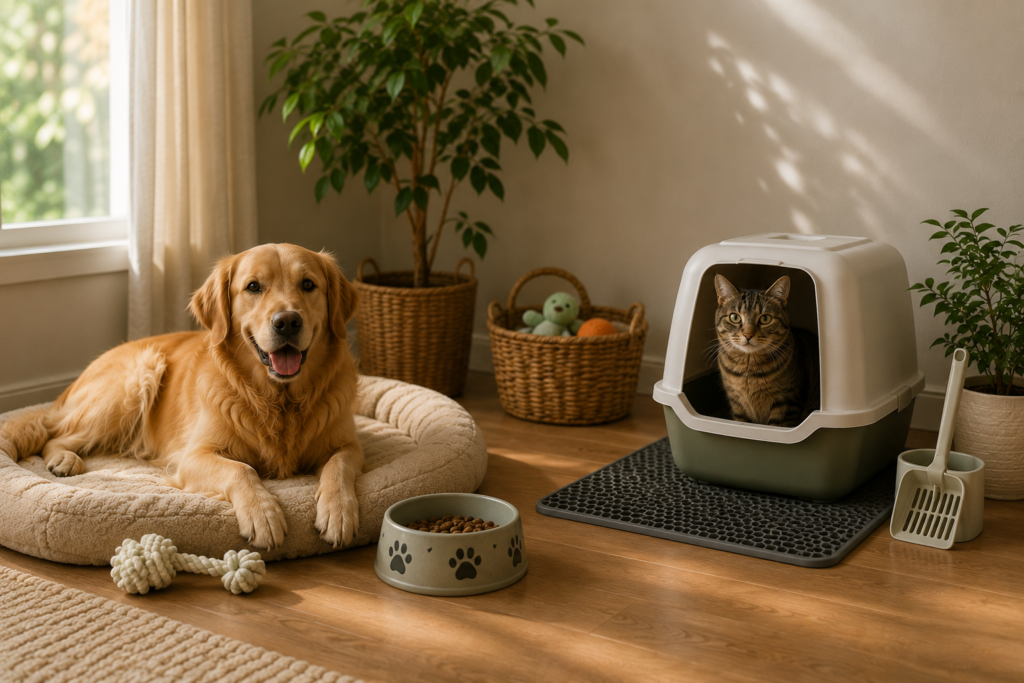
A dog and a cat, or two dogs with different temperaments, genuinely need different kinds of retreat space, and setting this up thoughtfully now does more for a multi-pet household’s stress levels than almost anything else on a prep checklist. A crate or a quiet corner works well for a dog who wants a den-like enclosed space. A cat, meanwhile, is far more likely to reach for height — a shelf, a cat tree, the top of a bookcase — to feel genuinely secure, since vertical space taps into an instinct dogs simply don’t share. Setting up both kinds of space before you need them, rather than scrambling once things feel crowded, means each animal already has somewhere that’s unmistakably theirs.
The dynamic that only shows up with more than one pet
Watch for one pet picking up on the other’s stress during training or desensitization work, since animals absorb tension from each other, not just from the changes happening around them. This is easy to miss because it looks like the second pet is reacting to the actual change — a new baby gate, an adjusted routine — when they’re really just responding to how tense the first pet has become about it. If you notice a normally calm animal getting unsettled during a session that’s really about the other pet, it’s worth pausing and separating the two rather than pushing through, since you’re not actually addressing the root cause by working with them together in that moment.
Using this dynamic in your favor
The same absorption effect that can spread stress can also spread calm. A steady, confident animal spending low-key time near a more anxious one — a shared quiet room, parallel feeding times, simply being in the same space during a calm part of the day — can genuinely help settle the more reactive pet, sometimes more effectively than direct training alone. This isn’t a substitute for actual behavior work if something more serious is going on, but as a background influence during an otherwise ordinary week, a calm housemate does real, quiet work you don’t have to actively manage.
A Little Support for Every Stage
Helpful checklists, guides, and resources to make each stage a little easier.
Timing the physical changes around each animal’s sensitivity
If you’re planning to move furniture, introduce baby gear, or shift a litter box as part of your prep, stagger those changes by pet sensitivity rather than doing everything in your own preferred order. Start the changes that affect your more easily-stressed animal earliest, giving them the longest runway to adjust, and save anything your steadier pet needs to adapt to for later, since they’ll likely need less lead time regardless of when it happens.
The detail that’s easy to skip
Don’t let the calmer pet’s lower-maintenance status mean less attention. They’re adjusting to a changing household too, even without the visible struggle, and it’s genuinely easy to spend all your active effort on whichever pet is loudly showing signs of stress while the quieter one’s needs go unnoticed simply because they’re not asking as visibly. A regular, brief check-in — are they eating normally, sleeping normally, seeking you out the way they usually do — catches a quiet problem before it becomes a loud one.
What this looks like across a few weeks
In practice, this often means: setting up the cat’s vertical retreat space in week one, since cats generally benefit from longer acclimation to a new safe spot; starting any desensitization work with your more anxious dog in week two, while keeping your calmer dog nearby during low-stress moments to help; and only shifting the litter box location in week three or four, gradually, once the rest of the household has settled into its earlier changes. None of this needs to happen on a rigid schedule — it’s more about sequencing than exact timing.
Start with the single-pet version of this checklist if you haven’t already — this article builds on it, and pairs with our broader multi-pet planning guide if you want the full picture on staggering vet visits and dividing care coverage.
We'd love to
hear from you.
Have a question, a tricky moment you're navigating, or a story worth sharing? This is a two-way street — we're always listening.
💌 Get in Touch