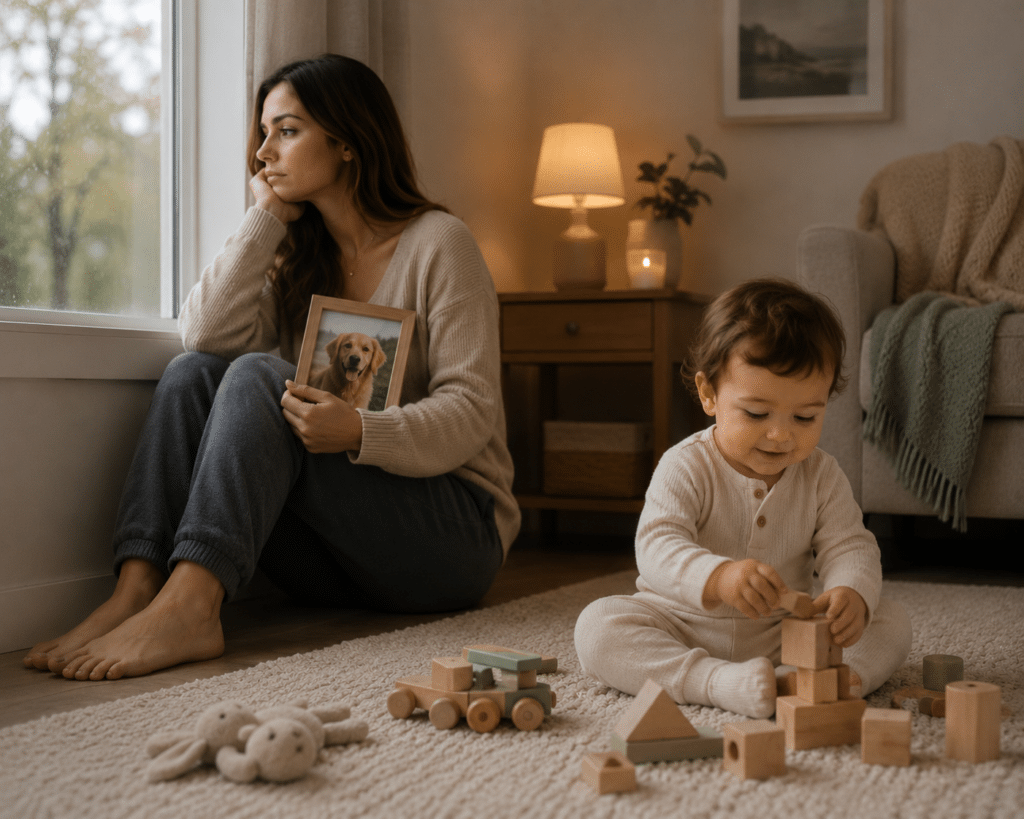
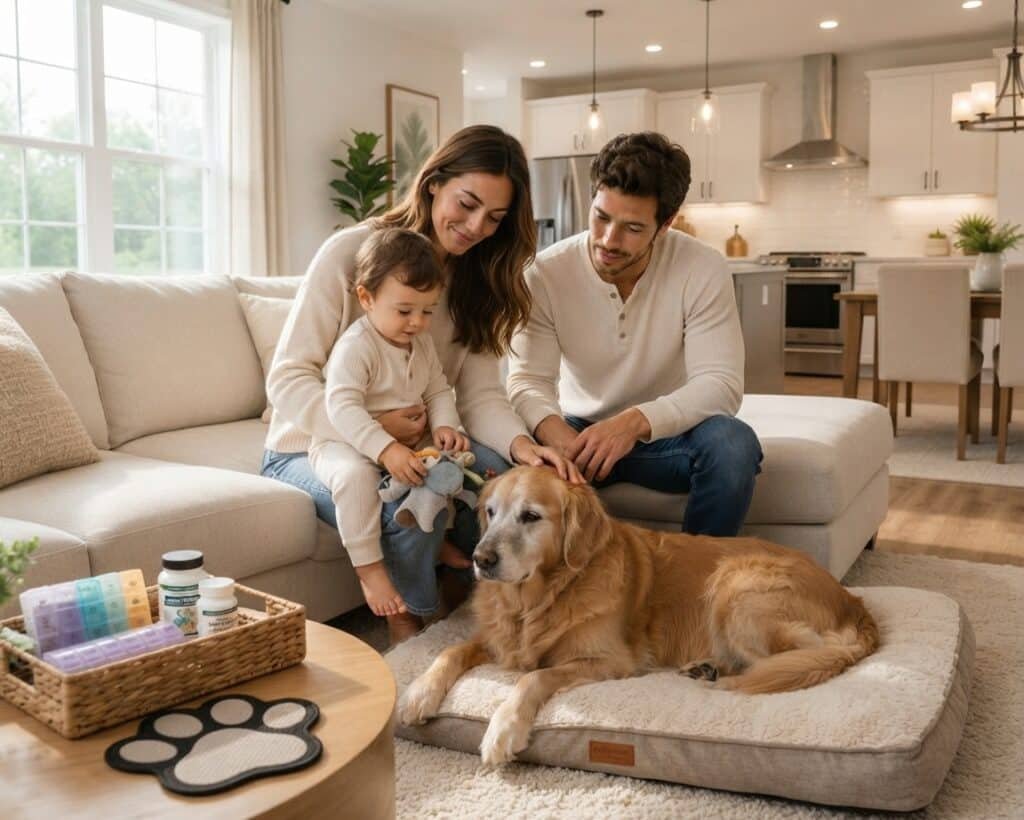
Your dog is slowing down, and your kids are old enough to notice.
You don’t have to manage that quietly — a simple, honest explanation gives them a way to understand what they’re already seeing, and that’s enough.
What’s actually worth explaining, and how
A simple, honest framing — pets get older and slower, the same way people do, and that’s a normal part of a long life together — gives kids a way to understand what they’re already observing, without needing more detail than they’re actually asking for.
Involving kids in the adjustments, rather than hiding them
Shorter walks, easier stairs, a softer bed — involving kids in these practical changes, rather than just quietly implementing them, turns an otherwise invisible process into something they can understand and even participate in caring for.
A Little Support for Every Stage
Helpful checklists, guides, and resources to make each stage a little easier.
The financial and logistical planning worth doing now, separately
“Senior” starts earlier than most people expect, and depends on size more than age alone — a giant-breed dog is typically considered senior around 5 to 6, a large dog around 7, a medium dog around 8, and a small dog closer to 9 or 10. Once a dog crosses into that stage, most vets recommend twice-yearly wellness exams instead of the usual once-a-year visit, plus annual bloodwork that commonly runs an extra $150 to $250 — worth building into the household budget now, the same way any other predictable, gradually increasing cost would be, rather than discovering it appointment by appointment.
Figures based on veterinary guidance summarized by RexVet’s senior dog care guide.
Preparing for the harder conversation, eventually
This stage often becomes the lead-in to an eventual conversation about loss, which is worth thinking about in advance rather than only in the moment — our companion piece on pet loss and grief covers that conversation specifically, when the time comes.
What this stage actually offers, alongside the harder parts
A slowing, aging pet also offers a real, tangible lesson in care, patience, and the value of a long relationship — something worth naming explicitly to kids, not just quietly managing around them.
Where this lands: an aging pet is a visible, ongoing part of family life worth talking about honestly as it happens, not something to manage silently — kids generally handle the truth better than an unexplained absence of explanation.
We'd love to
hear from you.
Have a question, a tricky moment you're navigating, or a story worth sharing? This is a two-way street — we're always listening.
💌 Get in Touch