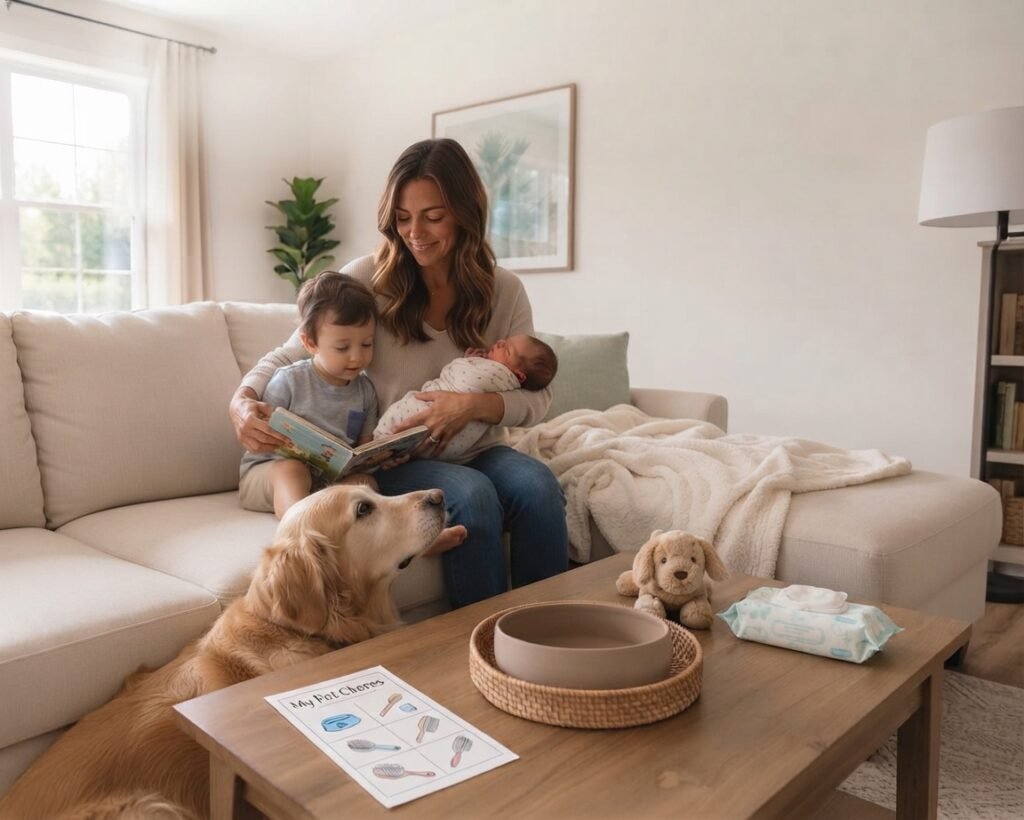
Your dog got through the first baby’s homecoming just fine.
This time isn’t a repeat, though — he’s settling in a newborn and an already-mobile toddler, in a house that’s simply busier than it was before.
Why the same prep still matters, even with an “experienced” dog
It’s tempting to skip the careful homecoming groundwork the second time, assuming your dog already knows the drill. Some of that experience does genuinely help, but the household your dog’s adjusting to is meaningfully different from last time, which means the calm, unhurried introduction principles are still worth applying in full, not abbreviated because it’s not technically your dog’s first newborn.
That means the same basics still earn their keep the second time around: a blanket or worn piece of clothing brought home from the hospital before you are, so the new smell arrives on its own rather than attached to a wall of new noise and activity; someone keeping your dog’s feeding and walk schedule as close to normal as possible while you’re at the hospital, since routine disruption is often harder on a dog than the baby itself; and a calm, low-key first introduction once you’re home, rather than a crowded one.
The toddler’s role in this transition, specifically
A toddler’s own reaction to a new sibling — potential regression, increased neediness, unpredictable emotional swings — adds another layer of household change your dog is also absorbing, on top of the newborn itself. This is worth expecting, not just the baby-specific adjustment covered the first time.
A Little Support for Every Stage
Helpful checklists, guides, and resources to make each stage a little easier.
Protecting one-on-one time gets harder, and matters more
With two kids now needing attention, carving out dedicated time with your dog specifically requires more intentional effort than it did with one child, precisely because there’s more competing for that same limited time and energy.
What tends to go better than people expect
Dogs who’ve already been through one newborn homecoming often do have a real advantage — established coping patterns, an already-existing retreat space, familiarity with baby-related sounds and routines — even though the overall household complexity has increased.
Where this lands: the second homecoming isn’t simply a repeat of the first — your dog’s prior experience helps, but the busier, more complex household deserves the same careful attention the first homecoming got, not less.
Managing two kids and a dog long-term looks different from managing one of each. here’s how the actual day-to-day dynamics shift once you’re past the initial homecoming.
Considering a second dog on top of a second baby? Here’s what’s actually worth weighing before you do.