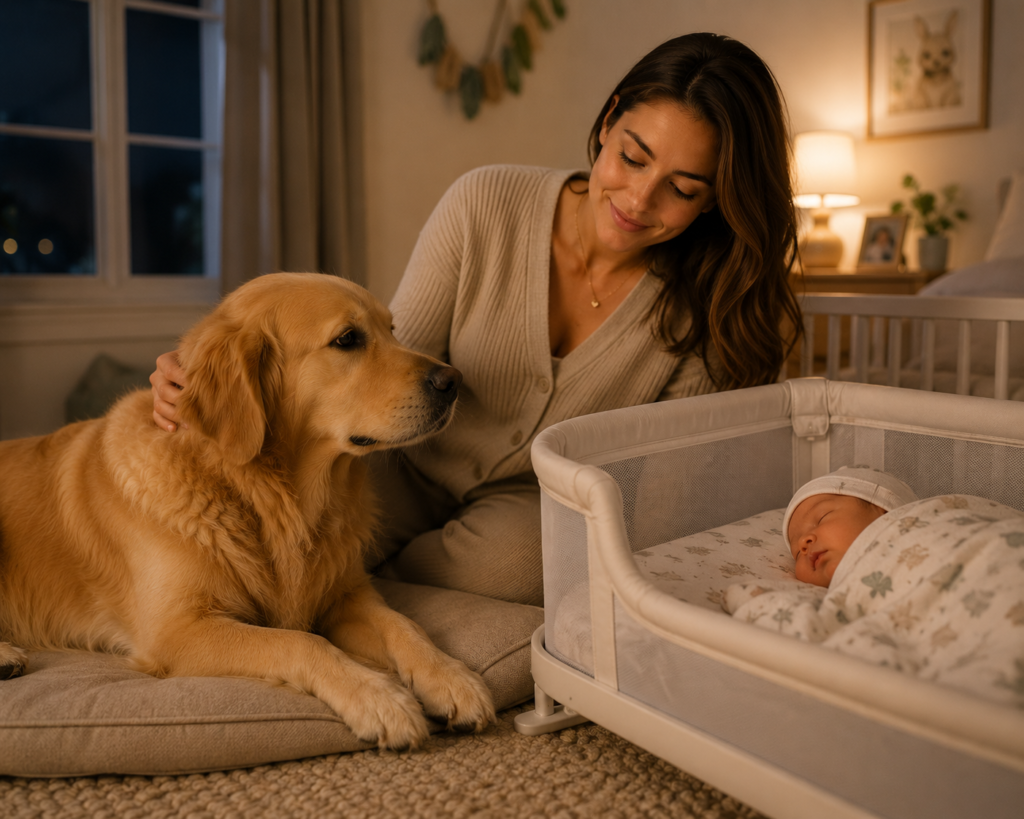
Somewhere in the newborn stage, most households quietly shift into permanent hush mode — vacuum avoided, doorbell muted, TV kept low.
At some point, easing back toward normal volume is worth doing deliberately, for your dog as much as for the household generally.
Before the timeline:
- This isn’t about rushing back to full volume immediately. A gradual return works better than a sudden one.
- Nothing here has a fixed deadline. It depends on how settled your baby’s sleep has become.
- The goal is a household that isn’t permanently walking on eggshells, once that’s no longer strictly necessary.
What’s in this guide
- Start with sounds your dog already tolerated well
- Time it around a predictable awake window
- Reintroduce gradually if it’s been a long hush period
- Watch your dog’s reaction as your guide
- Don’t keep permanent hush mode past its usefulness
1. Start with the sounds your dog already tolerated well before the baby arrived.
If your dog was fine with the vacuum or doorbell previously, reintroducing those sounds first, once the baby’s schedule has some predictability, is a lower-risk starting point than sounds that were already a challenge.
2. Time the reintroduction around a predictable awake window.
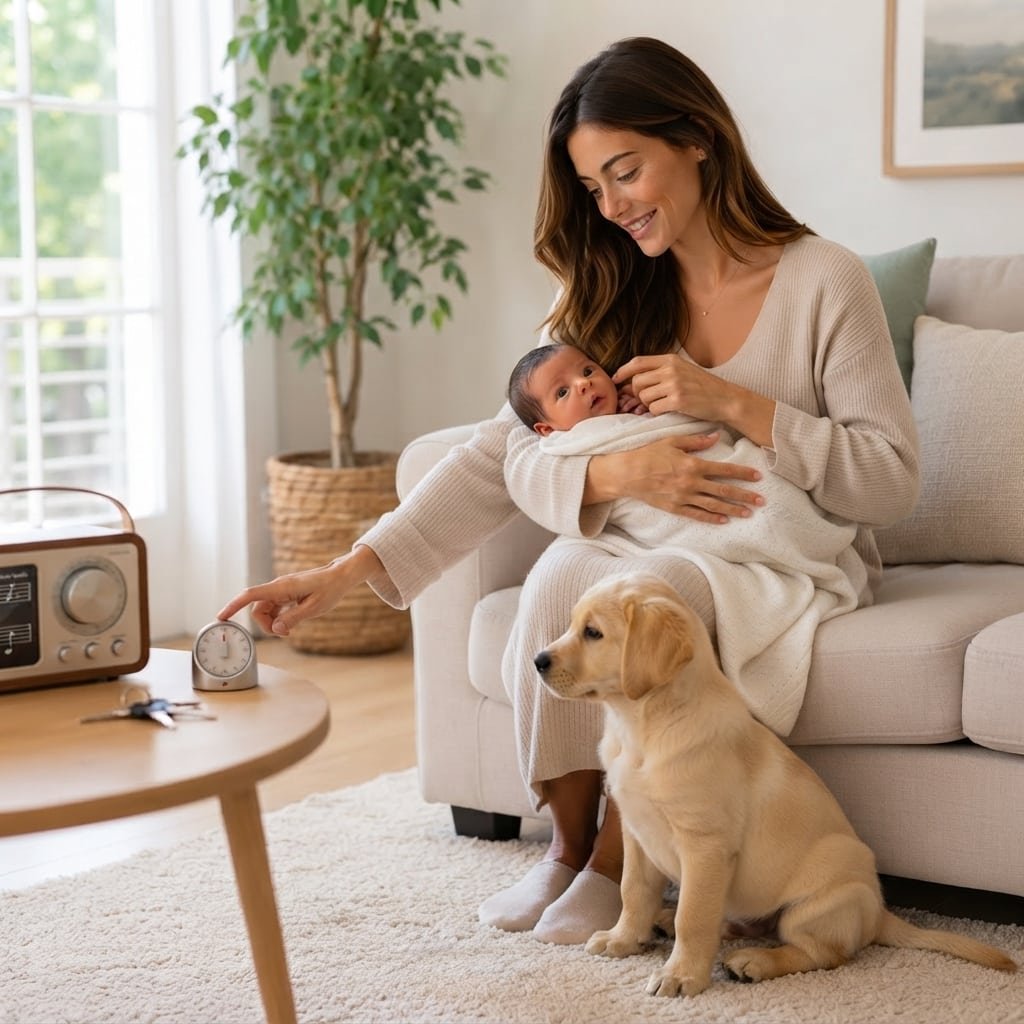
Running the vacuum or answering the door during a stretch when the baby’s reliably awake, rather than testing it during an actual nap, separates “getting your dog used to normal sound again” from “risk of waking the baby,” which makes the whole process less stressful for everyone.
A Little Support for Every Stage
Helpful checklists, guides, and resources to make each stage a little easier.
3. Reintroduce gradually if it’s been a genuinely long hush period.
Several weeks of unusually quiet living can mean even previously-normal sounds need a bit of gradual reintroduction, the same way any change benefits from not happening all at once.
4. Watch your dog’s reaction as your actual guide, not a calendar.
Some households can return to normal volume within a couple of weeks; others take longer, depending on the baby’s own sleep patterns. Your dog’s comfort level with reintroduced sound is a better signal than any general timeline.
5. Don’t feel obligated to keep permanent hush mode going past its usefulness.
Once the baby’s sleep has some real predictability, an indefinitely quiet household isn’t actually protecting anything — it’s just a habit that’s outlasted its original purpose, worth letting go of deliberately.
Where this actually lands: hush mode was a reasonable adjustment for the earliest weeks, not a new permanent baseline — easing back toward normal, on your dog’s actual timeline rather than a fixed one, is a completely reasonable next step.
Naps are often the trickiest part of that transition. Here’s how to accommodate them without suppressing your dog’s normal energy.
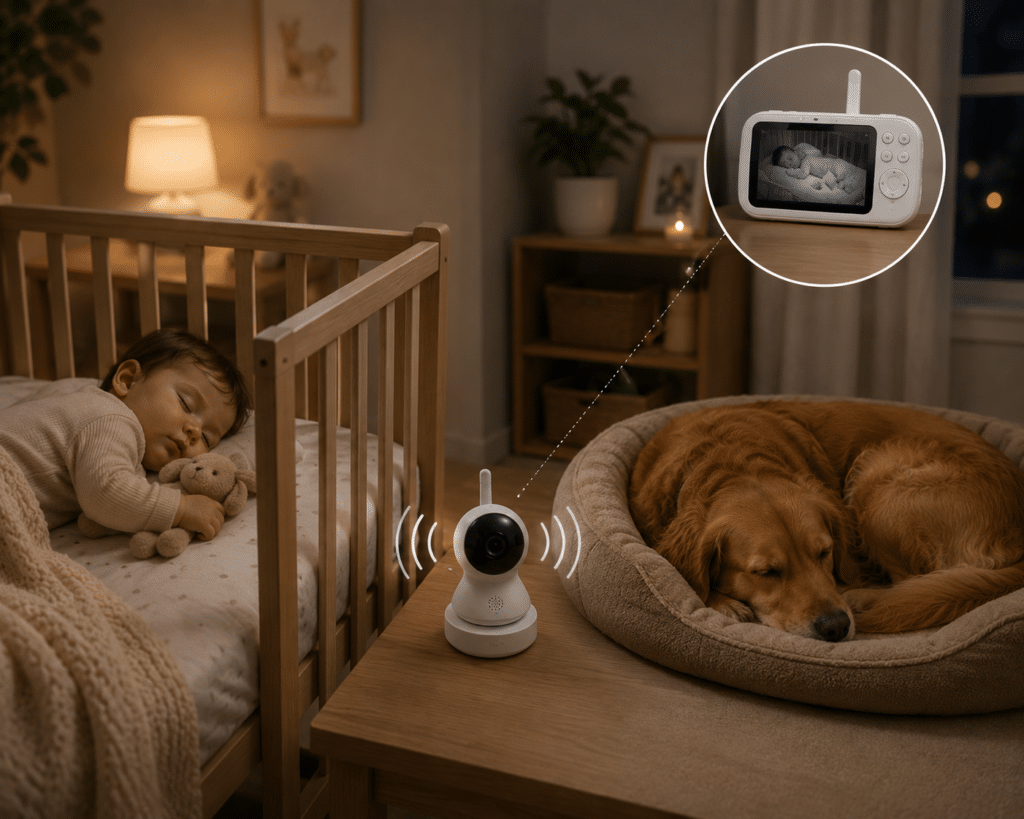
If your dog’s anxiety is part of what’s keeping the house hushed, a baby monitor already on your registry can help with that too.