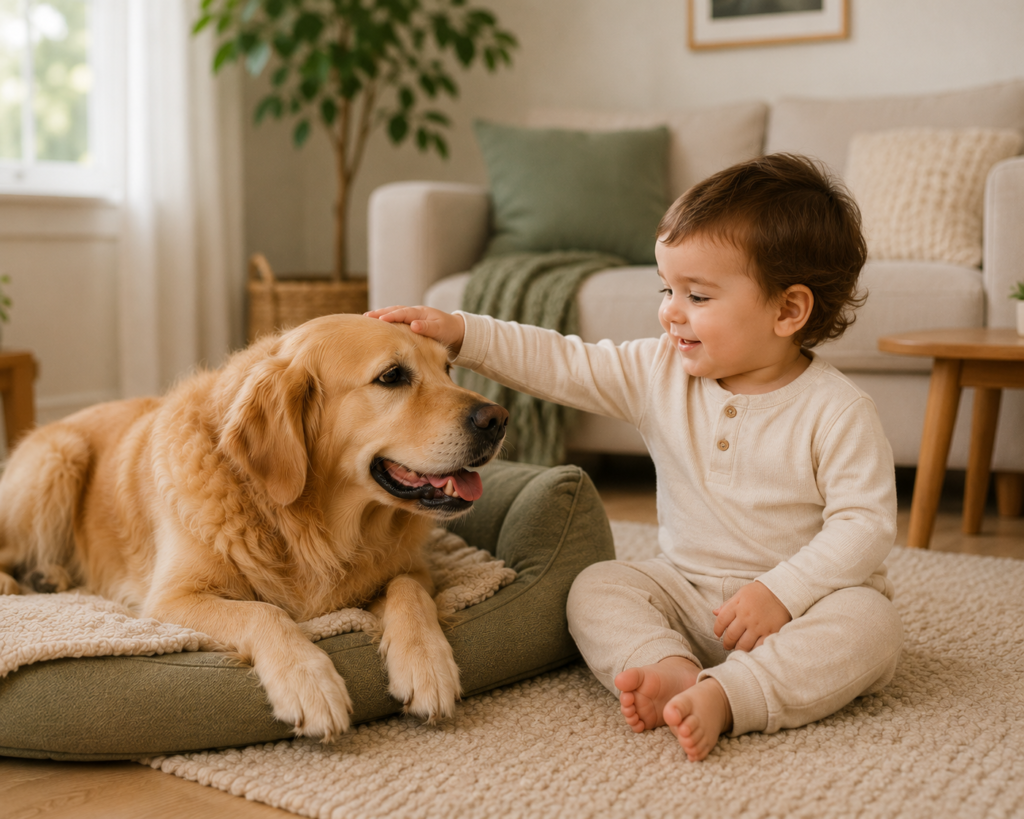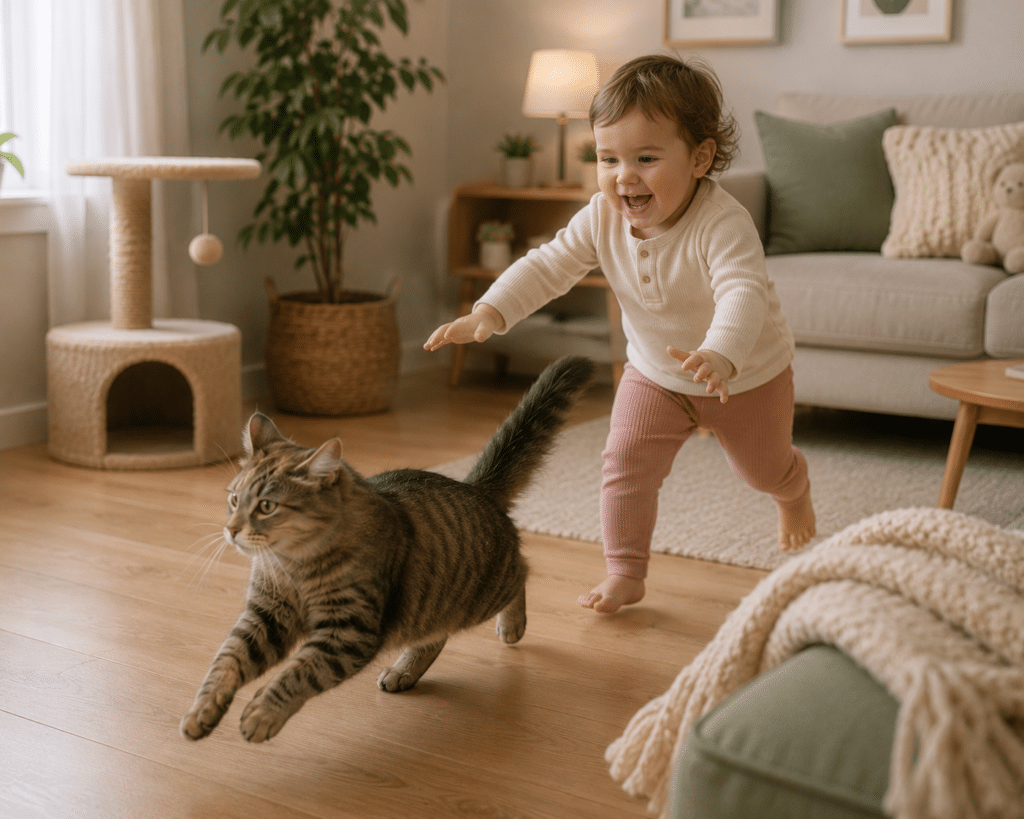
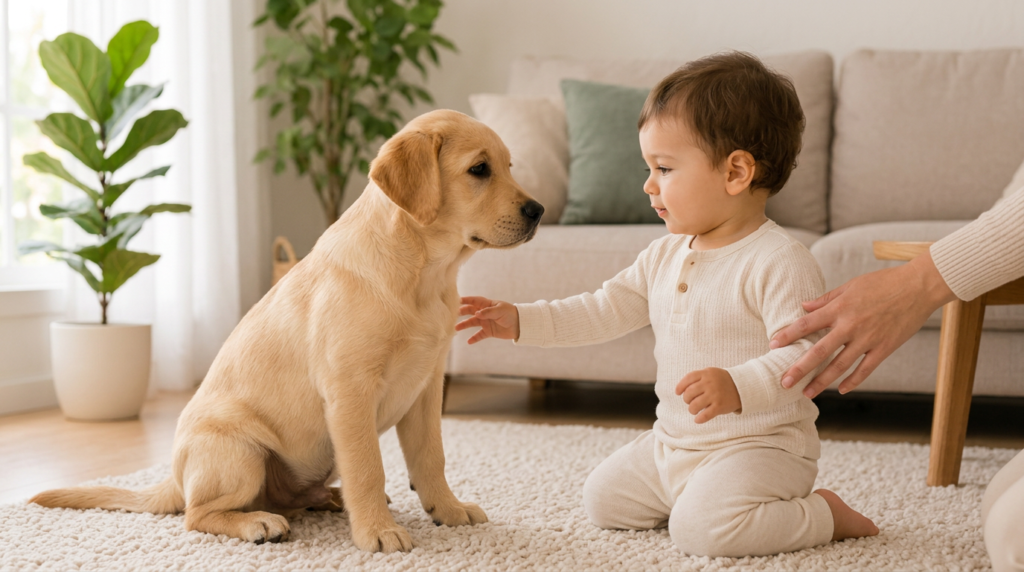
Your toddler reaches toward the dog mid-meal, and the dog goes stiff for half a second before anyone notices. More than 4.5 million people are bitten by dogs every year in the US, and children account for at least half.
Most parents are watching for a growl.
By the time you hear one, the dog has already moved past every quieter signal that came first — the ones almost no one was ever taught to see.
The signals themselves
A turned head, a stiffened body, moving out of reach, “whale eye” (the whites of the eyes showing), ears pinned back, a hard fixed stare, a tucked or unusually stiff tail. None of it looks dramatic, which is exactly why it’s so often missed. These signals share one thing in common: they’re all versions of a dog trying to communicate discomfort in the mildest way available to them, escalating only if the milder signal goes unnoticed.
Why these signs get missed so consistently
Part of the reason is that these signals look, to an untrained eye, a lot like normal resting behavior — a still dog, a quiet dog, doesn’t read as alarming the way a growl or a snap does. Learning to notice the difference between relaxed stillness and tense stillness is a genuine skill that takes deliberate practice, not something most people pick up automatically just from being around dogs.
The three moments that turn a gentle dog defensive
Eating, sleeping, and caring for puppies are the three moments experts consistently flag as ones that turn an otherwise gentle dog defensive — worth teaching your toddler as a firm, simple rule. These aren’t situations where a “good” dog is somehow failing; they’re moments where any dog’s instinct to protect something important overrides their usual tolerance, regardless of how well-trained or good-natured they normally are.
A Little Support for Every Stage
Helpful checklists, guides, and resources to make each stage a little easier.
Never punish the growl itself
If you do hear one, resist the instinct to scold. It’s a dog’s clearest, most honest warning, and punishing it doesn’t make a bite less likely — it just teaches the dog to skip the warning next time. A dog who’s been punished for growling doesn’t become less likely to bite; they become more likely to bite without any warning at all, because the growl itself got associated with a negative consequence rather than the situation that triggered it.
Teaching “ask first” as an actual habit
Permission before approaching, letting the dog come to you, gentle touch on the back or shoulders rather than the face or tail. This works best taught as a consistent ritual rather than a one-time lecture — asking “can I pet him?” out loud yourself, every time, models the behavior you want your toddler to eventually do on their own, long before they’re actually capable of remembering it unprompted.
What this looks like with a visiting or unfamiliar dog
All of this matters even more with a dog your toddler doesn’t already know well, since you have far less baseline sense of that dog’s specific tolerance and triggers. A stranger’s dog, however friendly it seems, deserves the full “ask first” ritual every time, without the familiarity that might make you more relaxed about your own dog’s signals.
Why supervision remains the actual foundation
None of the above replaces actually watching, not just being in the room — that’s still the single most effective thing on this list. Recognizing these signals is only useful if someone’s positioned to actually notice and act on them in the moment, which is a different thing from simply being nearby while distracted by something else.
Recognizing these signals early doesn’t mean distrusting your dog. It means catching the moment where a little space solves everything.
Learning to read these signals is half of the picture — here’s the other half, teaching your toddler the rules that go with it.
We'd love to
hear from you.
Have a question, a tricky moment you're navigating, or a story worth sharing? This is a two-way street — we're always listening.
💌 Get in Touch