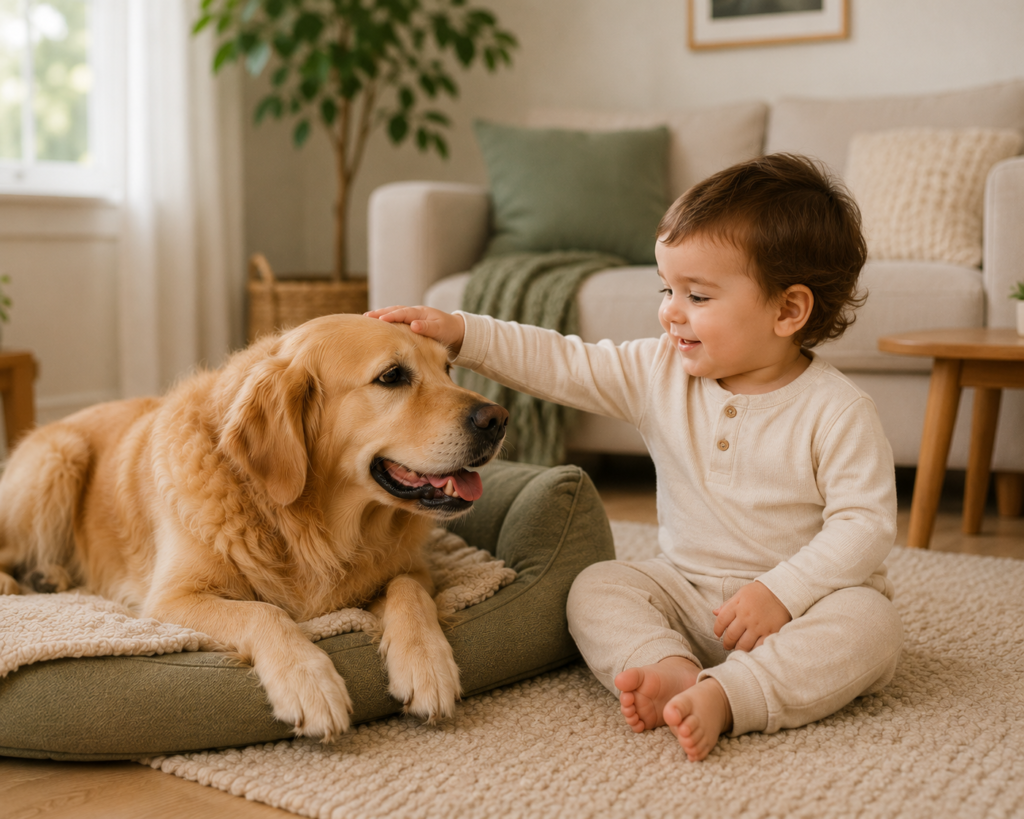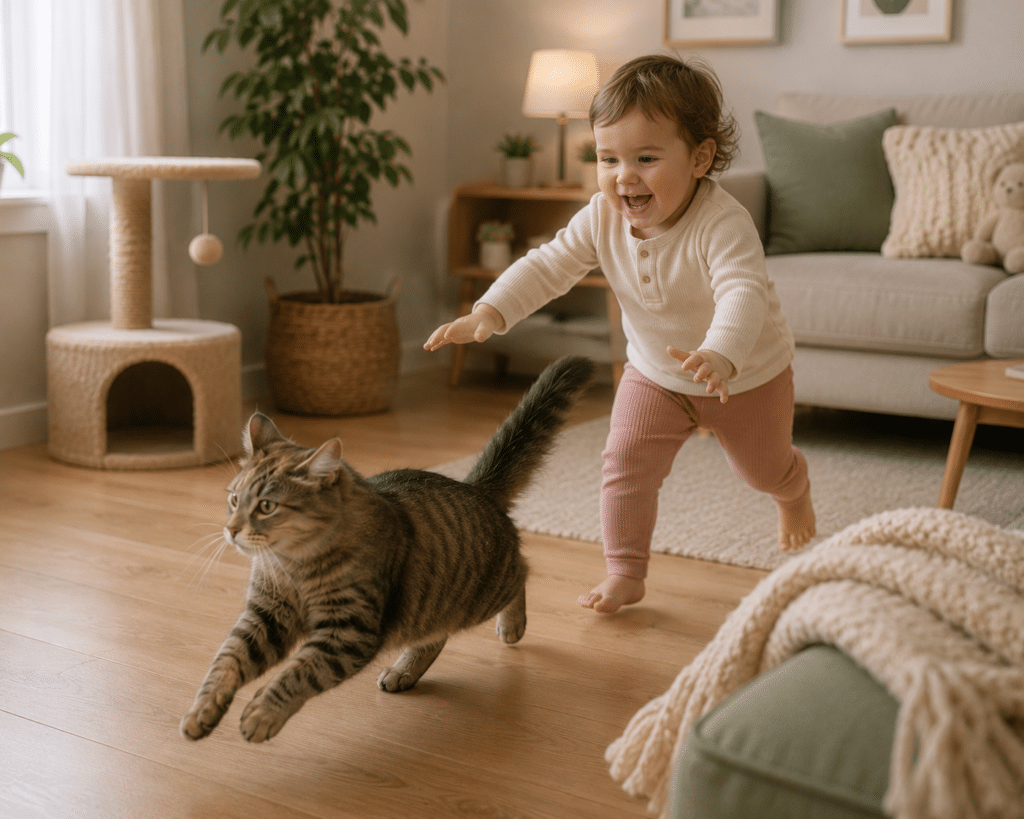
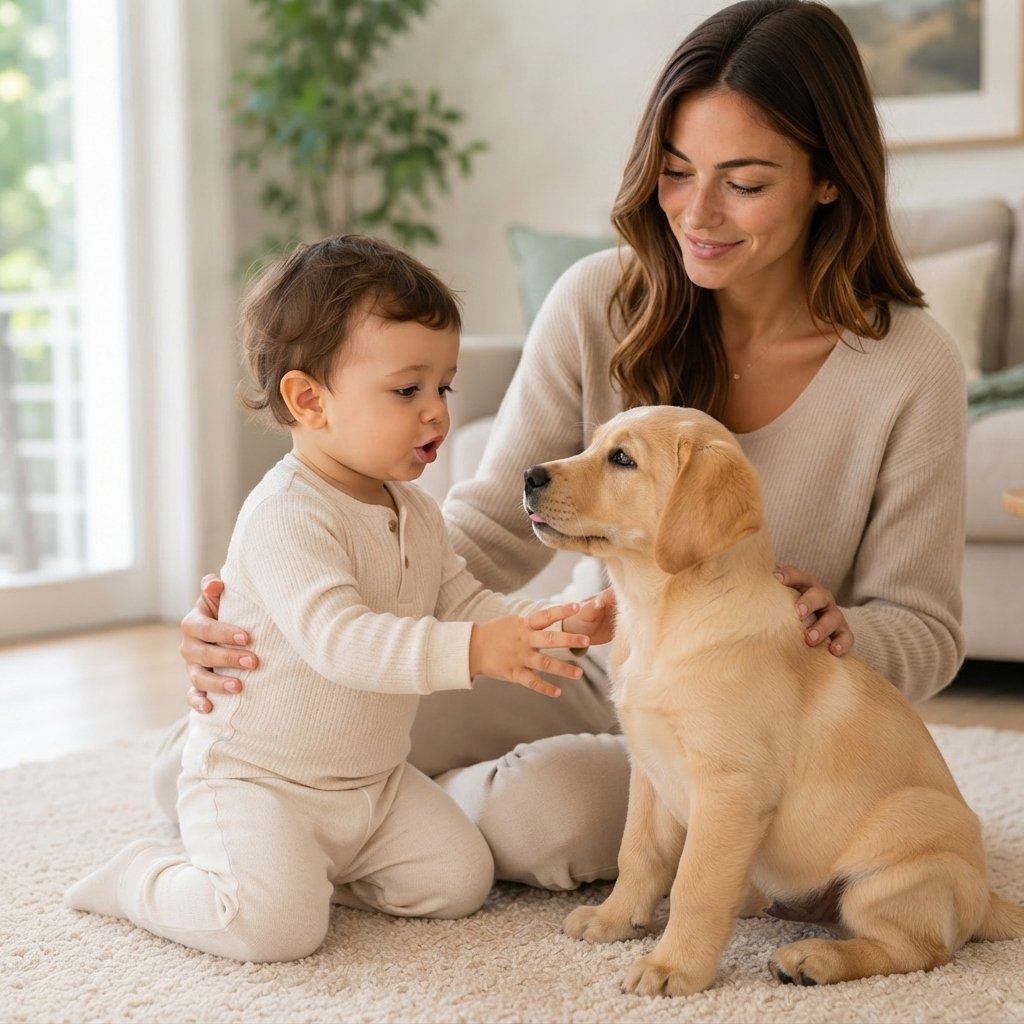
Your toddler’s excitement around the pet is loud, always.
That volume alone can startle a dog or cat as much as any touch — which makes a gentle voice worth teaching on its own, not just as a manners lesson.
Why volume matters as much as touch
Most toddler-pet guidance focuses heavily on physical gentleness — soft touch, no grabbing — and volume tends to get less attention despite being just as relevant. A dog or cat who’s perfectly comfortable with gentle physical contact can still startle at an unexpectedly loud, sudden sound right next to them, which makes voice its own worthwhile category to teach directly rather than assuming it’s covered by general gentleness rules.
How to actually teach this at toddler age
Modeling a quieter voice yourself in your pet’s presence, especially during calm moments, gives your toddler a concrete example rather than an abstract instruction. “Inside voice for the dog” or a similarly short, repeatable phrase works the same way other toddler-pet rules do — short, consistent, repeated often enough to become automatic rather than something that needs re-explaining every time.
A Little Support for Every Stage
Helpful checklists, guides, and resources to make each stage a little easier.
What this looks like in an actual excited moment
Toddlers aren’t going to suppress genuine excitement entirely, and that’s not really the goal. A brief, calm reminder in the moment — “let’s use our gentle voice, she’s a little startled” — redirects without demanding your toddler stop being excited altogether, which is a more realistic ask than expecting consistent quiet enthusiasm from a two or three-year-old.
Reading your pet’s response as the actual feedback
A pet who flinches, moves away, or otherwise reacts to loud excitement is giving you real, immediate information worth narrating out loud — “look, he backed up, that means we got too loud” turns the moment into a small, concrete lesson rather than just a correction.
Where this lands: volume is its own genuinely useful thing to teach, separate from physical gentleness — a short, repeated phrase and modeling it yourself does most of the actual work here.
Once the volume’s dialed in, teaching a toddler to respect the dog’s space is the natural next rule to build on top of it.
We'd love to
hear from you.
Have a question, a tricky moment you're navigating, or a story worth sharing? This is a two-way street — we're always listening.
💌 Get in Touch