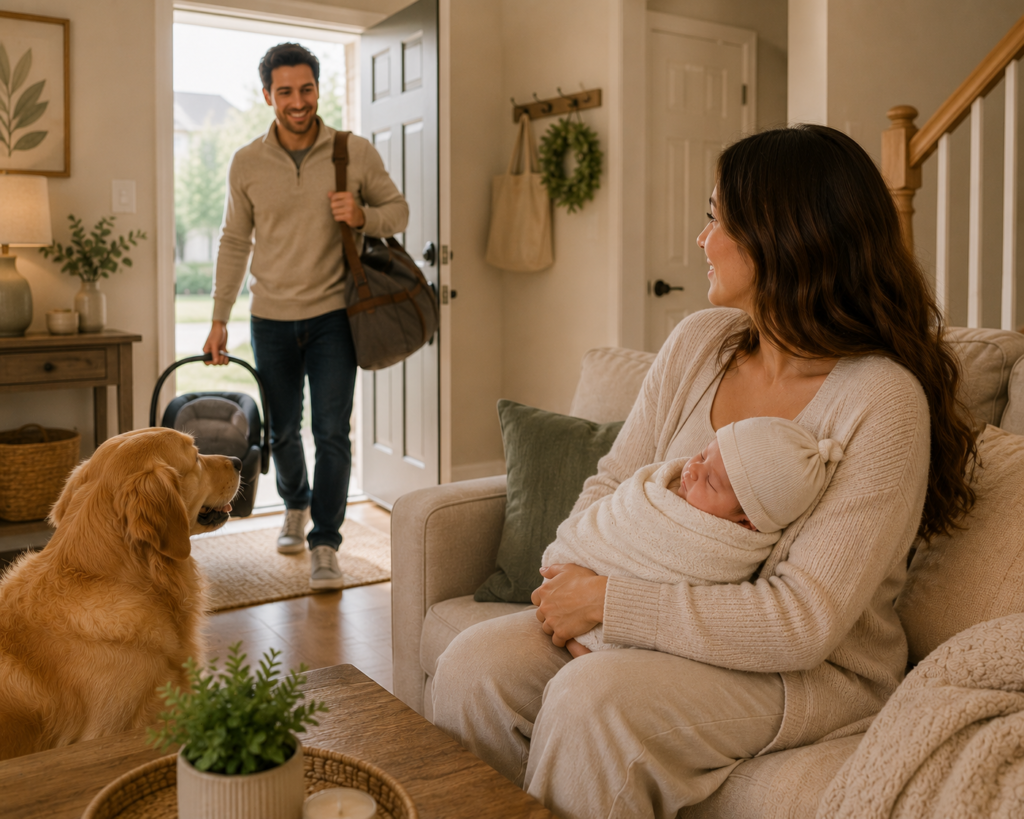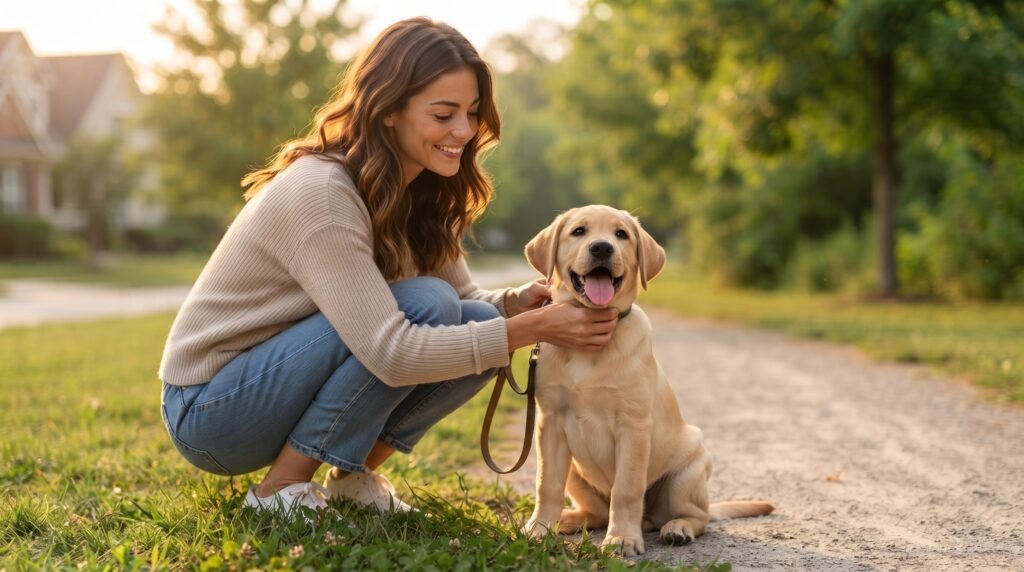
Your dog’s walk schedule was probably one of the first things to shift once the baby came home.
Getting back to something closer to normal doesn’t need to happen all at once, or on any particular deadline.
Before the timeline:
- This isn’t about restoring the exact pre-baby routine immediately. A new normal is a reasonable outcome too.
- Nothing here assumes you’re back to full physical capacity yet. Adjust the pace to where you actually are.
- The goal is a routine that’s sustainable for your new household, not a race back to what things looked like before.
What’s in this guide
- Start with whoever’s available
- Shorten before you cut entirely
- Reintroduce your own involvement gradually
- Watch how your dog responds to the new normal
- Build in flexibility
1. Start with whoever’s available, not necessarily you.
If you’re still in a recovery window, or simply stretched thin those first weeks, having a partner, family member, or dog walker cover walks doesn’t need to be a temporary stopgap you’re rushing to end — it can just be the current arrangement for as long as it makes sense.
2. Shorten before you cut entirely.
A shorter version of the normal walk, rather than skipping it altogether, tends to keep your dog’s routine feeling intact even when the full version isn’t realistic yet. Ten minutes most days beats a longer walk only occasionally, for keeping a sense of consistency.
A Little Support for Every Stage
Helpful checklists, guides, and resources to make each stage a little easier.
3. Reintroduce your own involvement gradually, once you’re ready.
When you do start taking walks back on yourself, easing into the previous distance and pace rather than jumping straight back to it respects wherever your own recovery actually is, physically and otherwise.
4. Watch for how your dog responds to the new normal, not just the old one.
A dog who’s adjusted well to a shorter, different routine doesn’t necessarily need to go back to the exact previous schedule just because that’s what used to happen — if the current version is working for everyone, it’s fine to let that be the new baseline rather than a temporary compromise.
5. Build in flexibility for the weeks that are still unpredictable.
The newborn stage doesn’t run on a fixed schedule, and neither will your ability to walk your dog some days. A flexible mindset about which days get a full walk and which get a shorter one tends to hold up better than a fixed plan that keeps getting disrupted.
Where this actually lands: there’s no required timeline for getting back to your dog’s old routine, and a genuinely new one that fits your current household is a perfectly good outcome, not just a placeholder for the “real” routine you’re working back toward.
Still in the earliest days of recovery and wondering what’s actually safe to take on yourself? Here’s what’s worth delegating, and for how long.