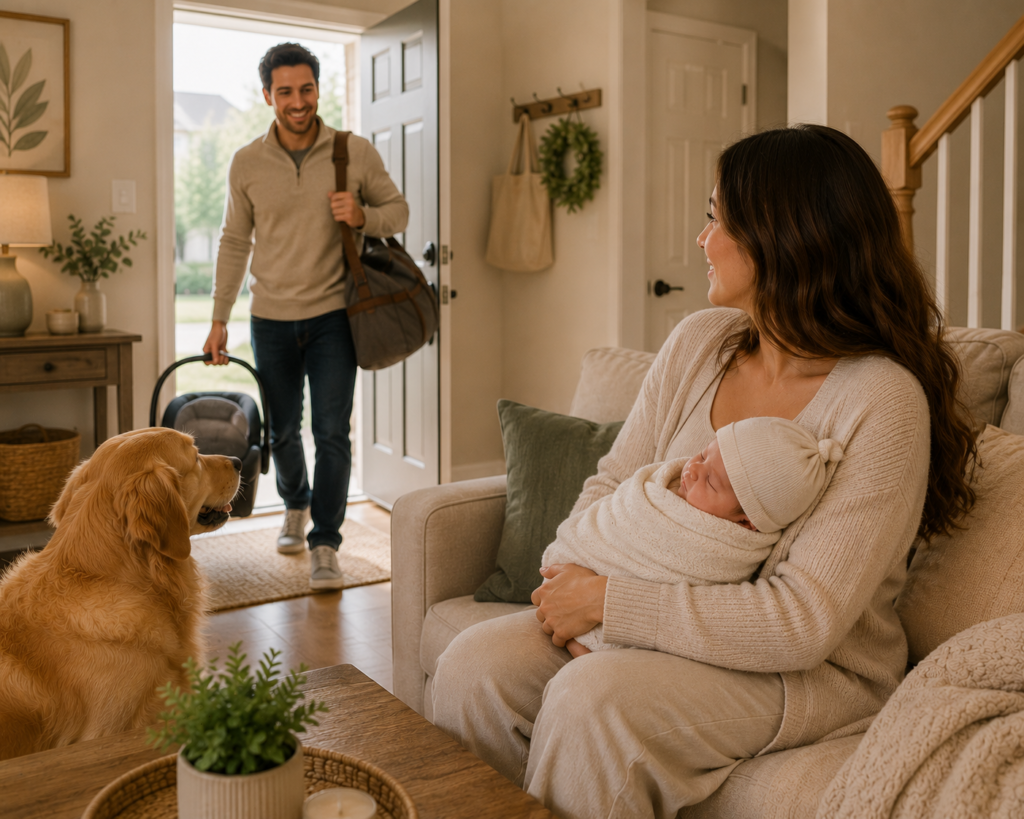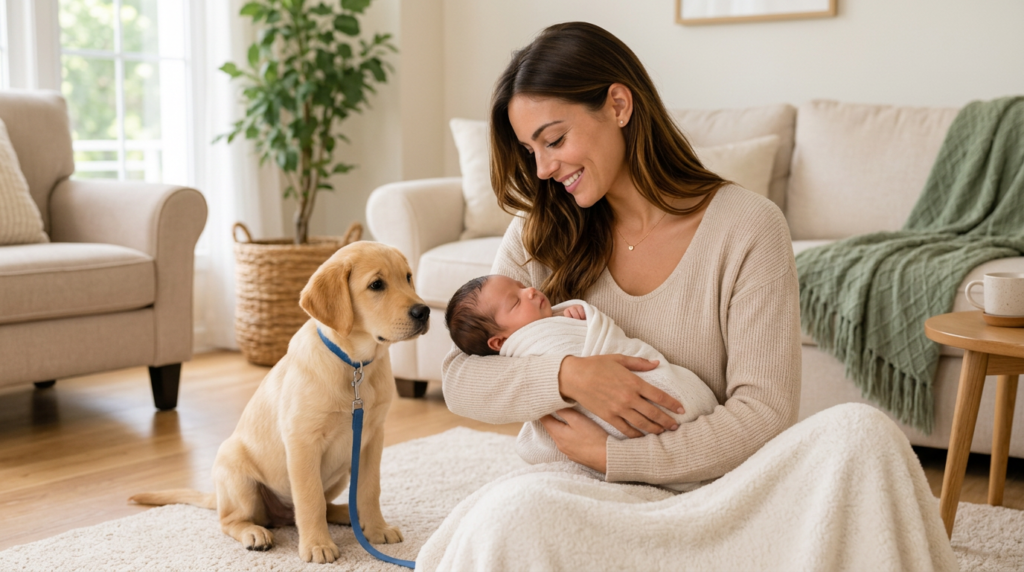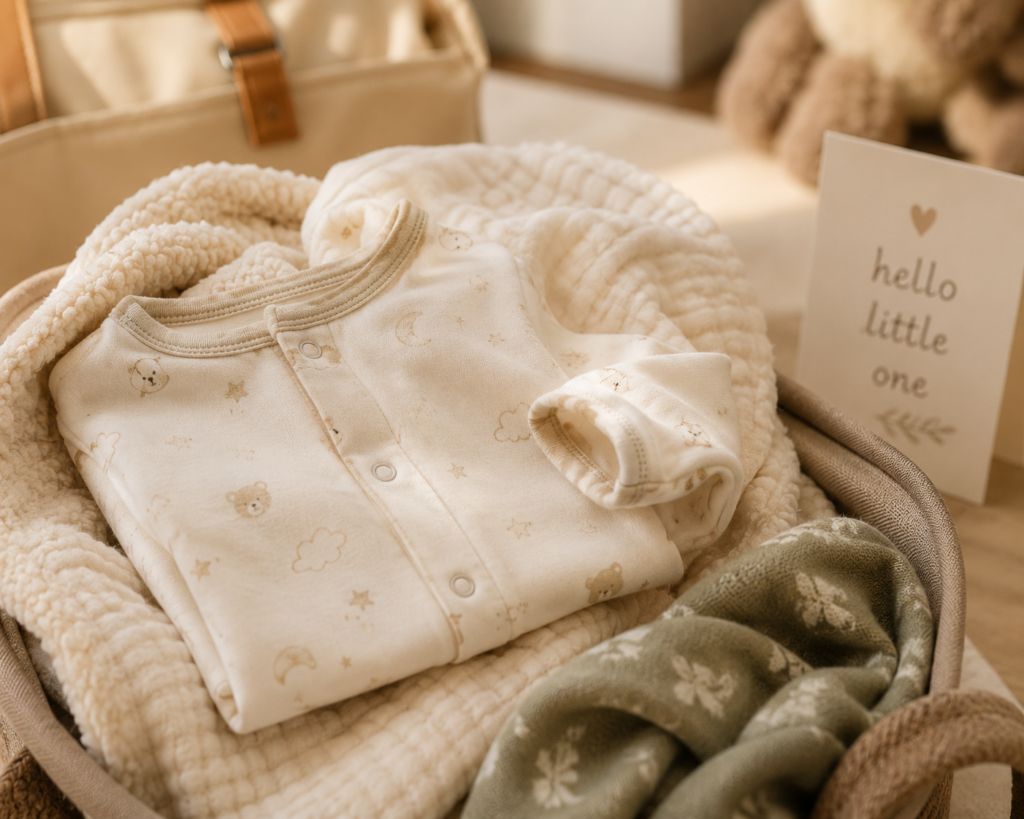
There’s one thing worth packing that has nothing to do with the diaper bag.
A blanket or onesie your baby’s already worn — sent home before you are.
Before the how-to:
- A small head start, not a make-or-break moment.
- Nothing here needs to happen perfectly. A five-minute sniff is enough to matter.
- This sets up the actual homecoming day — it doesn’t replace it.
What’s in this guide
- Why this specific thing, and not something else
- What to actually do with it once it’s home
- A genuine booster, if your dog runs anxious
- What this actually sets up
1. Why this specific thing, and not something else.
A dog’s sense of smell is estimated to be at least 40 times more sensitive than a human’s, which is exactly why scent, not sight, is how your dog will actually get to know the new arrival first. Have your partner or a family member carry home something your baby’s already worn — a hospital blanket, a hat, a onesie — while you’re still there together.
This works because it separates two things that would otherwise happen at once: meeting a new smell, and meeting a new person attached to it. Giving your dog a head start on the first part means the actual homecoming only has to introduce the second.
2. What to actually do with it once it’s home.
Leave it somewhere your dog already considers their space — their bed, a favorite spot on the couch — rather than handing it directly to them. Let them approach and sniff it on their own terms; a treat placed nearby (not forced into the moment) helps build a positive association with the new smell before anyone’s even met.
If your dog shows no interest in it at first, that’s fine — leave it in place for a day or two rather than moving it around trying to prompt a reaction. Curiosity tends to arrive on its own timeline, and forcing the moment usually just adds pressure that wasn’t there before.
A Little Support for Every Stage
Helpful checklists, guides, and resources to make each stage a little easier.
3. A genuine booster, if your dog runs anxious.
Pheromone products — Adaptil, specifically formulated for dogs — can take some edge off for a dog who tends to run anxious, though vets are clear these work alongside behavior groundwork, not instead of it. Worth asking your vet about if your dog already shows signs of stress with change. These typically come as plug-in diffusers, and starting one a week or two before the due date gives it time to actually take effect, rather than plugging it in the day you come home.
4. What this actually sets up.
By the time the baby physically walks through the door, the smell won’t be the unfamiliar part anymore — one less new thing your dog has to take in during those first minutes. Combined with the exercise and calm-greeting steps in the actual homecoming sequence, this is one of several small things that each remove a little uncertainty from an otherwise overwhelming day.
If you can’t get someone to bring the blanket home separately
Not every birth plan allows for a partner or family member to leave and come back before you do — a quick delivery, a solo trip to the hospital, or simply no one available to make the extra trip. If that’s your situation, this step isn’t essential; it’s a head start, not a requirement, and skipping it just means your dog’s first real exposure to the baby’s scent happens during the actual homecoming instead of beforehand. The sniff-from-a-distance approach in the first-ten-minutes guide still applies either way.
If you want to know more: Small Door Veterinary’s guide to introducing pets to a new baby covers the scent step in more depth.
Easiest first: This is the easiest, lowest-effort thing on the whole homecoming list — a blanket in a bag, five minutes of sniffing, and one thing your dog won’t have to figure out all at once on the actual day.
Once you’re actually home, here’s exactly what to do in the first 10 minutes.