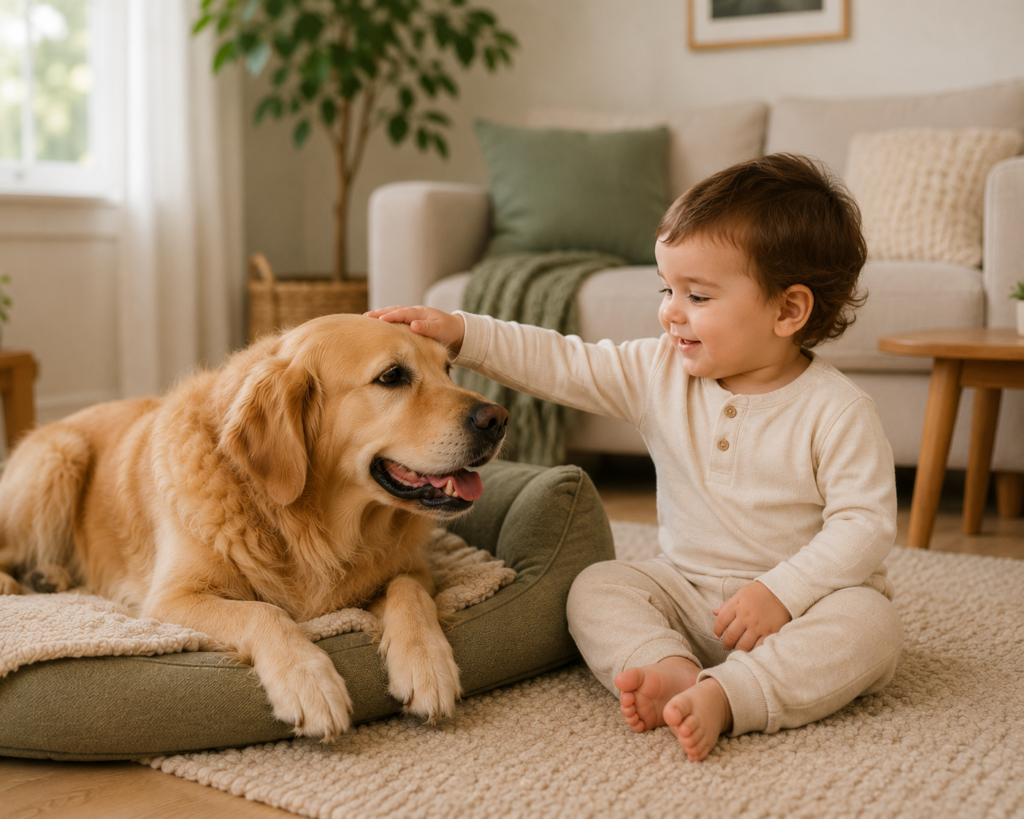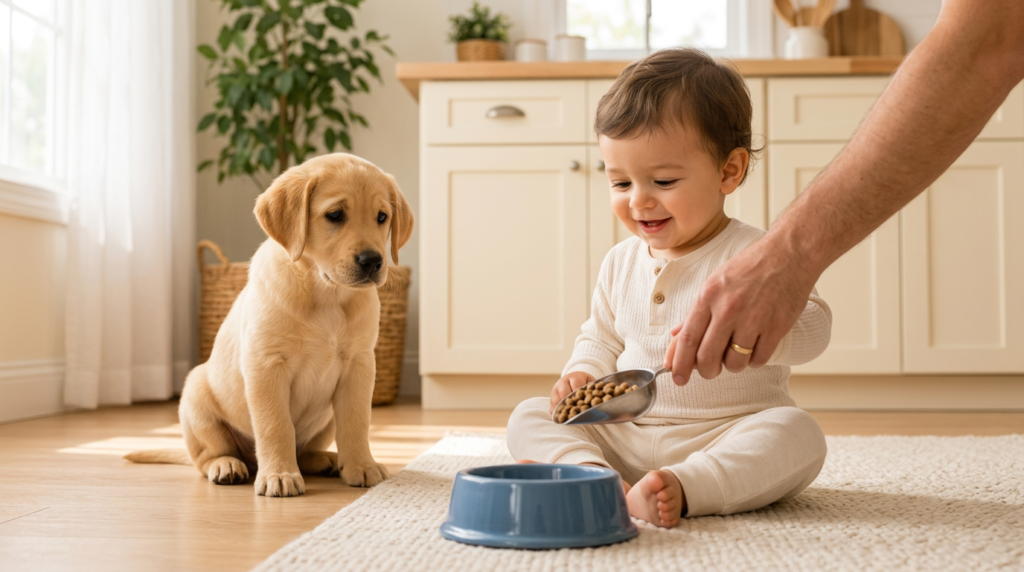
You’re bringing home a new puppy, and your toddler’s already comfortable around your established dog.
A new dog and an old one don’t need the same introduction.
Your toddler hasn’t changed — the new dog just hasn’t had time yet to build the same familiarity your established one already has.
What changes with a new dog specifically
Slower, more structured introductions matter more here than they would with a dog your toddler’s known their whole life. The new dog doesn’t yet have the baseline patience or familiarity an established dog’s built up over time, which means the margin for a toddler’s typical missteps — a too-enthusiastic approach, a grab — is genuinely smaller during this early window.
Extra supervision during the adjustment period
Even more vigilant supervision than your usual baseline, for the first several weeks specifically, gives both the new dog and your toddler room to build the same kind of familiarity an established relationship already has, without either one being caught off guard by the other’s unfamiliar behavior.
In practice, that means giving the new dog its own space — a separate room with a door, not just a corner of the living room — for the first few days, so your toddler and the new arrival get used to each other’s sounds and smells before any face-to-face contact happens. Vets who work through this transition regularly recommend keeping that separation going for the first couple of weeks with a genuinely new dog, and using a leash or baby gate for the first supervised meetings, so either one always has an easy way to retreat if it’s overwhelmed. Your toddler’s version of this rule is simple: no unsupervised entry into the new dog’s space during that whole stretch, no exceptions, even once the novelty of “the new puppy” has worn off for them.
Introduction timeline adapted from Texas A&M College of Veterinary Medicine’s guidance on bringing a new dog into the household.
A Little Support for Every Stage
Helpful checklists, guides, and resources to make each stage a little easier.
What doesn’t need to change with an established dog
If your toddler and an existing dog already have a settled, comfortable relationship, there’s no need to suddenly introduce more caution than the relationship has actually demonstrated it needs — the standard ongoing rules (soft touch, respecting retreat, supervision) continue to apply, just without the extra new-dog caution layered on top.
A practical way to think about the difference
Treat a new dog’s first several weeks with your toddler the way you’d treat any other major new introduction — more structure, closer supervision, patience for both sides to adjust — and let it gradually shift toward your established baseline as the relationship actually earns that trust over time.
Where this lands: a new dog genuinely needs a more careful introduction period than an established one does — not because your toddler’s changed, but because the dog hasn’t had time yet to build the same familiarity.
Whichever stage your dog’s in, this household rule book covers the ongoing rules once the introduction period’s behind you.