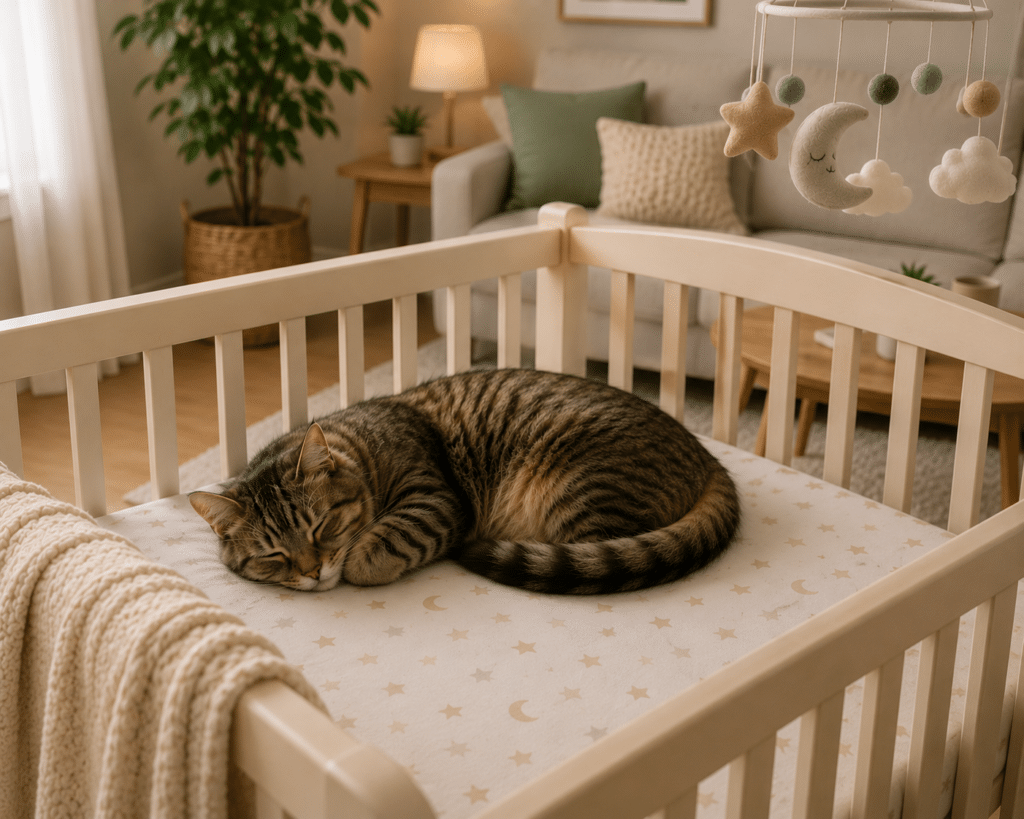

Keeping the house quiet for a nap doesn’t mean your dog’s normal energy is suddenly a problem.
Their bark, their nails on the floor, their whole normal self isn’t something to shush into submission — it just needs a better window to happen in.
The instinct during this stretch is often to shush, restrict, or scold a dog’s normal activity level — barking, nails on the floor, general movement — simply because the house needs to be quiet right now. The trouble is that a dog doesn’t understand “quiet for now” as a temporary, context-specific request; repeated correction just reads as their normal behavior suddenly being wrong, which can create confusion or anxiety that outlasts the actual nap.
Separating “quiet house” from “suppressed dog”
A more workable approach separates the two entirely. Timing more active play and exercise for windows when the baby’s reliably awake, rather than trying to prevent activity during every nap, gives your dog a legitimate outlet rather than an ongoing restriction. A stuffed chew or a longer-lasting treat during nap windows specifically gives your dog something quiet and engaging to do, rather than nothing to do at all while also being told to be still.
A Little Support for Every Stage
Helpful checklists, guides, and resources to make each stage a little easier.
Addressing the root, not just the symptom
For a dog with genuinely high energy, a longer walk or more vigorous play session earlier in the day, timed before a predictable nap window, can meaningfully reduce the activity level during the quiet stretch itself — addressing the root of the noise rather than just suppressing the symptom in the moment.
If naps aren’t predictable enough to plan around
If naps are happening unpredictably enough that timing activity around them isn’t realistic, background sound — a fan, white noise — can help mask ordinary household noise without needing your dog’s normal behavior to change at all.
Where this lands: the goal isn’t a suddenly quiet dog, it’s a house that accommodates naps without treating your dog’s normal activity as a behavior problem. Timing, engagement, and background sound do more of this work than restriction does.
We'd love to
hear from you.
Have a question, a tricky moment you're navigating, or a story worth sharing? This is a two-way street — we're always listening.
💌 Get in Touch