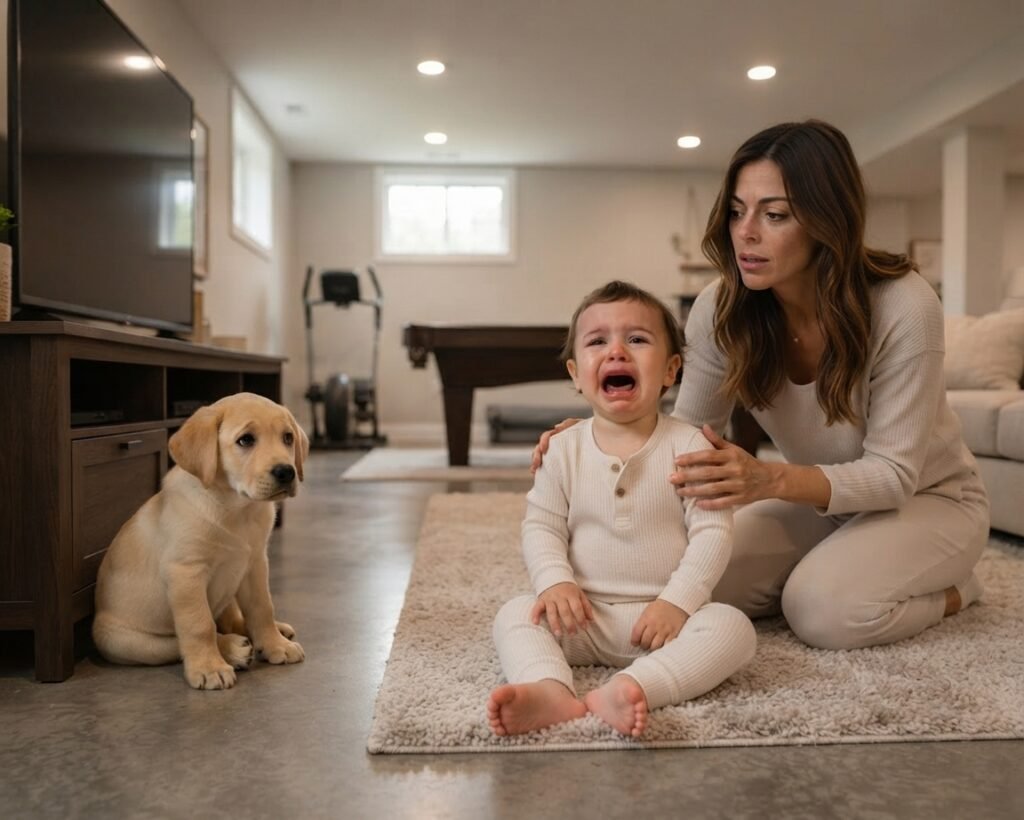
Your dog vanishes the second the tantrum starts.
It looks like rejection, but it isn’t — that’s just a normal, healthy way for a dog to handle a sudden loud moment, toddler or not.
What this isn’t about
This isn’t about your dog specifically disliking your toddler, or being unable to handle a normal part of having a small child in the house. It’s the same response most dogs show to any sudden burst of loud, unpredictable human emotion — a slammed door, raised voices, a smoke alarm. A toddler’s tantrum just happens to be one of the more frequent versions of that kind of moment.
What actually helps
The most useful thing to do here is genuinely simple: let your dog retreat without correction. A dog choosing to leave a stressful situation is doing exactly the right thing, and interrupting that choice — calling them back, treating the retreat as a problem — removes a coping mechanism that’s actually working well for them.
A Little Support for Every Stage
Helpful checklists, guides, and resources to make each stage a little easier.
If your dog doesn’t have an obvious retreat spot
If your dog doesn’t have an obvious place to retreat to during these moments, this is a good reminder of why a consistent, always-accessible retreat space matters — a toddler meltdown is exactly the kind of unpredictable, sudden stressor that space is meant to absorb.
Setting one up is straightforward: pick a spot your dog already gravitates toward when they want quiet, not a fully isolated room since most dogs still want to be near the family, and keep it away from the loudest, busiest part of the house. Put their bed, water, and a favorite chew there, and feed a meal or two in that spot early on so it builds a genuinely positive association rather than feeling like a timeout. The one rule that matters most: nobody, toddler included, follows them in or disturbs them once they’re there.
Setup guidance adapted from Preventive Vet’s veterinary-reviewed advice on creating a dog’s safe space.
What tends to happen over time
As tantrums become a familiar, if not exactly pleasant, part of the household’s normal texture, most dogs settle into a fairly consistent pattern around them — reliably retreating, reliably returning once things calm down — rather than the reaction escalating or becoming a bigger issue.
Where this lands: your dog hiding during a meltdown is a normal, healthy response to a genuinely loud, unpredictable moment — not a judgment on your toddler, and not something that needs correcting.
Wondering what else belongs in your dog’s corner of the household? here’s the fuller version of teaching your toddler to respect it.
We'd love to
hear from you.
Have a question, a tricky moment you're navigating, or a story worth sharing? This is a two-way street — we're always listening.
💌 Get in Touch