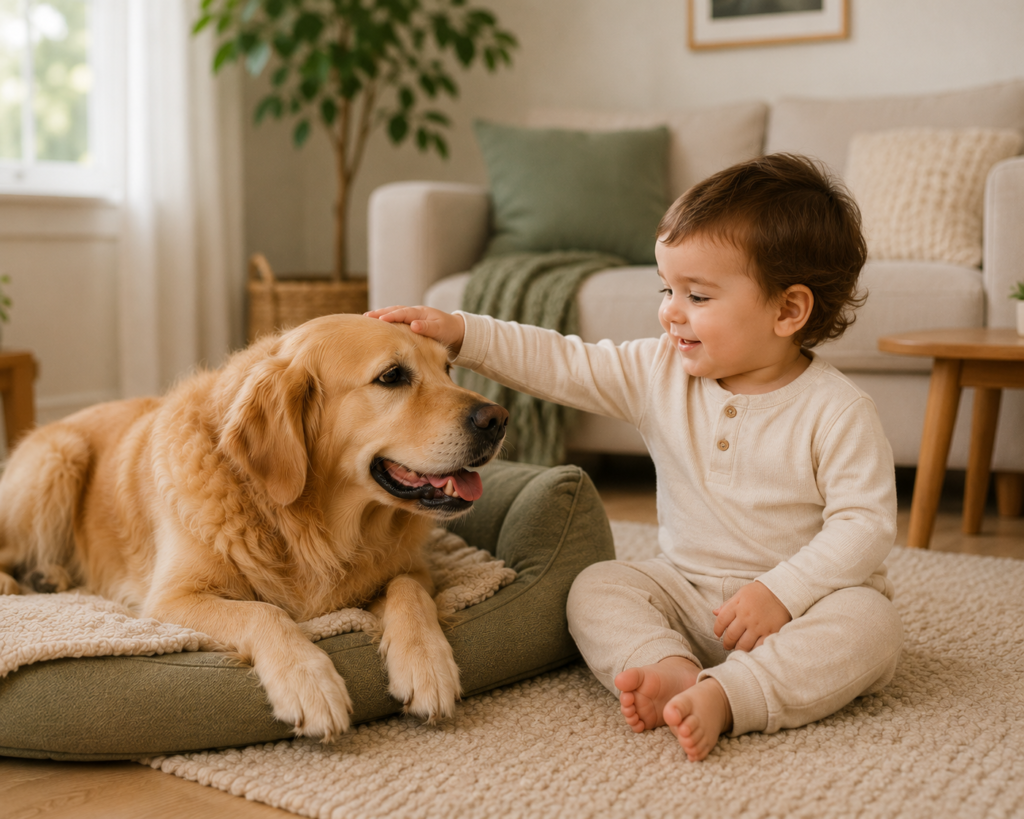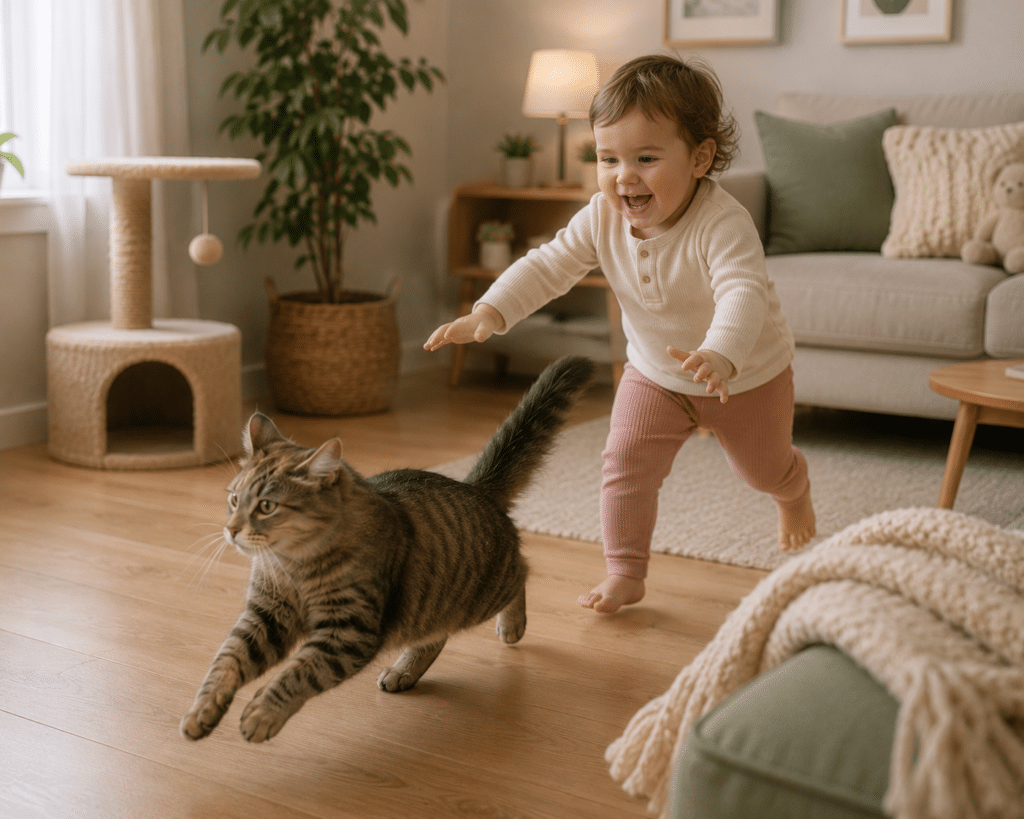

Your toddler’s barking back at the dog and crawling around on all fours.
That’s not a red flag — it’s just imitation, one of the most ordinary ways a small child explores the world.
The one thing actually worth redirecting
The behavior worth actually addressing is specific and narrow: eating from the pet’s bowl or drinking from their water dish, purely for hygiene reasons, not because the impulse behind it is concerning. A calm, matter-of-fact redirect — “that’s the dog’s bowl, here’s yours” — handles this the same way you’d redirect any other everyday exploratory behavior, without needing to treat it as alarming.
A Little Support for Every Stage
Helpful checklists, guides, and resources to make each stage a little easier.
What doesn’t need any discouragement
General mimicry — the barking, the crawling, the play-acting — doesn’t need active discouragement at all. It’s a normal form of imaginative play, similar to a toddler pretending to be any other interesting creature or character, and it typically fades on its own as their play interests broaden and diversify with age. This kind of role-play usually starts around age two and can run through age six or seven for kids who lean toward more intense, immersive imaginative play — developmentally, it’s tied to the same skill that lets a toddler start guessing what someone else might be thinking or feeling, not a sign of anything off-track. Most kids naturally phase out of animal-specific play once they’re old enough to want a friend’s buy-in before acting out a character, rather than doing it solo.
Developmental context on toddler imitative play via Today’s Parent, citing developmental pediatrician Elizabeth Young.
When it might be worth mentioning at a checkup
If the imitation seems to be replacing other typical play and interaction rather than existing alongside it, that’s worth mentioning at a regular pediatric checkup simply as a general development conversation, not because animal-imitation play itself is a red flag on its own — most toddlers who go through this phase move through it without any issue.
Where this lands: imitating the pet is a completely normal, common phase of toddler development. The one thing actually worth redirecting is eating or drinking from the pet’s own dishes, for simple hygiene reasons — the rest is just typical imaginative play.
Redirecting a specific impulse like this works the same way it does with another common toddler habit worth its own rule — grabbing a toy straight out of the dog’s mouth.
We'd love to
hear from you.
Have a question, a tricky moment you're navigating, or a story worth sharing? This is a two-way street — we're always listening.
💌 Get in Touch