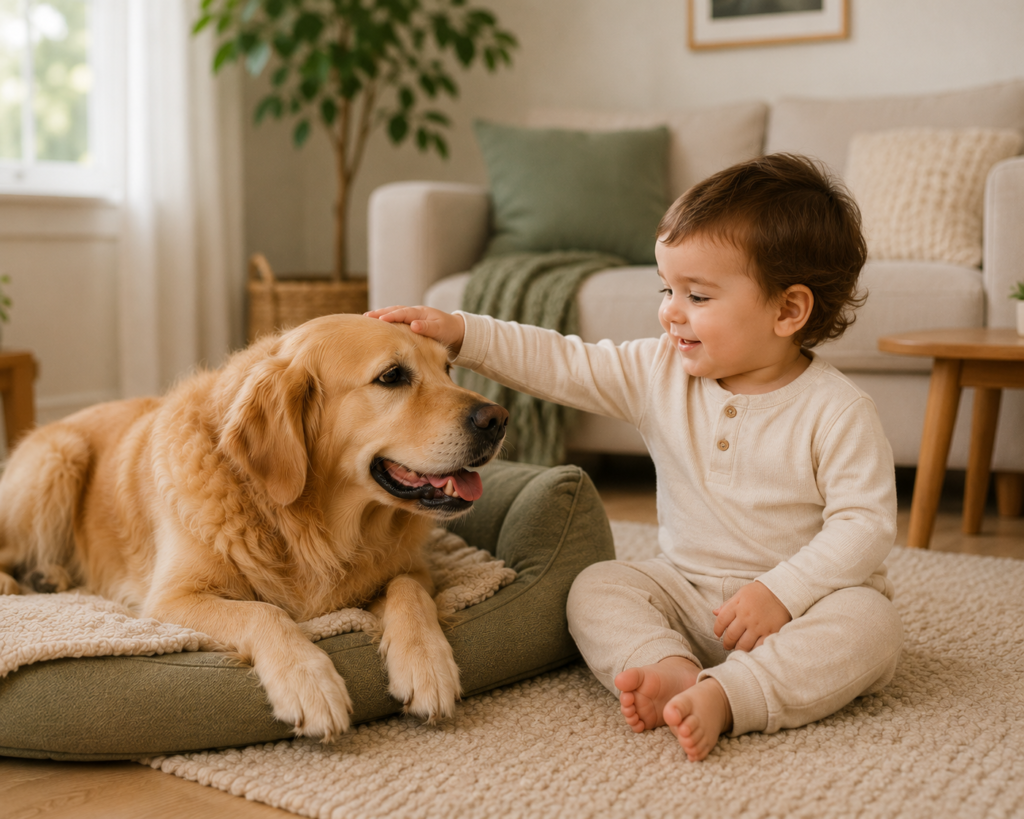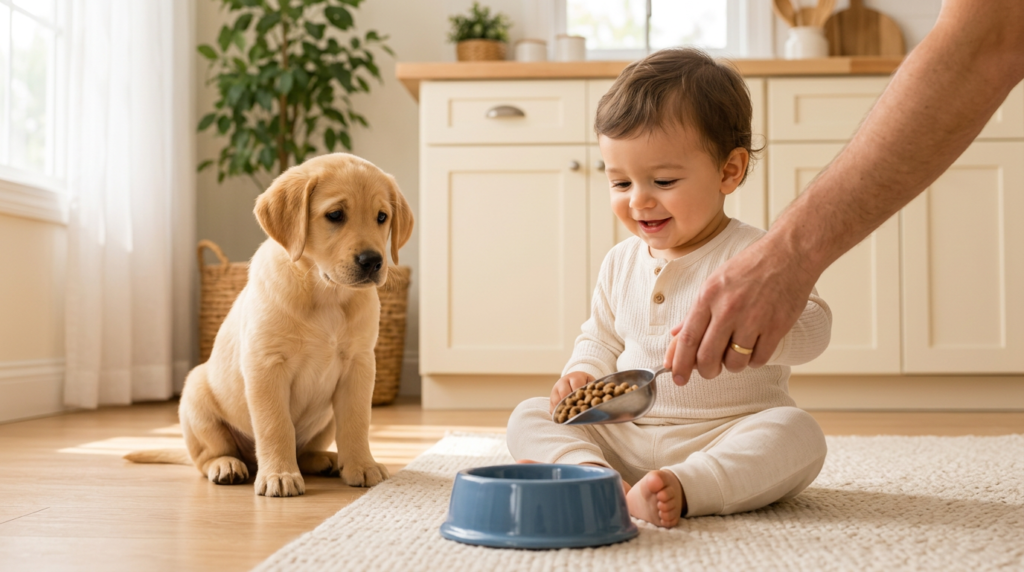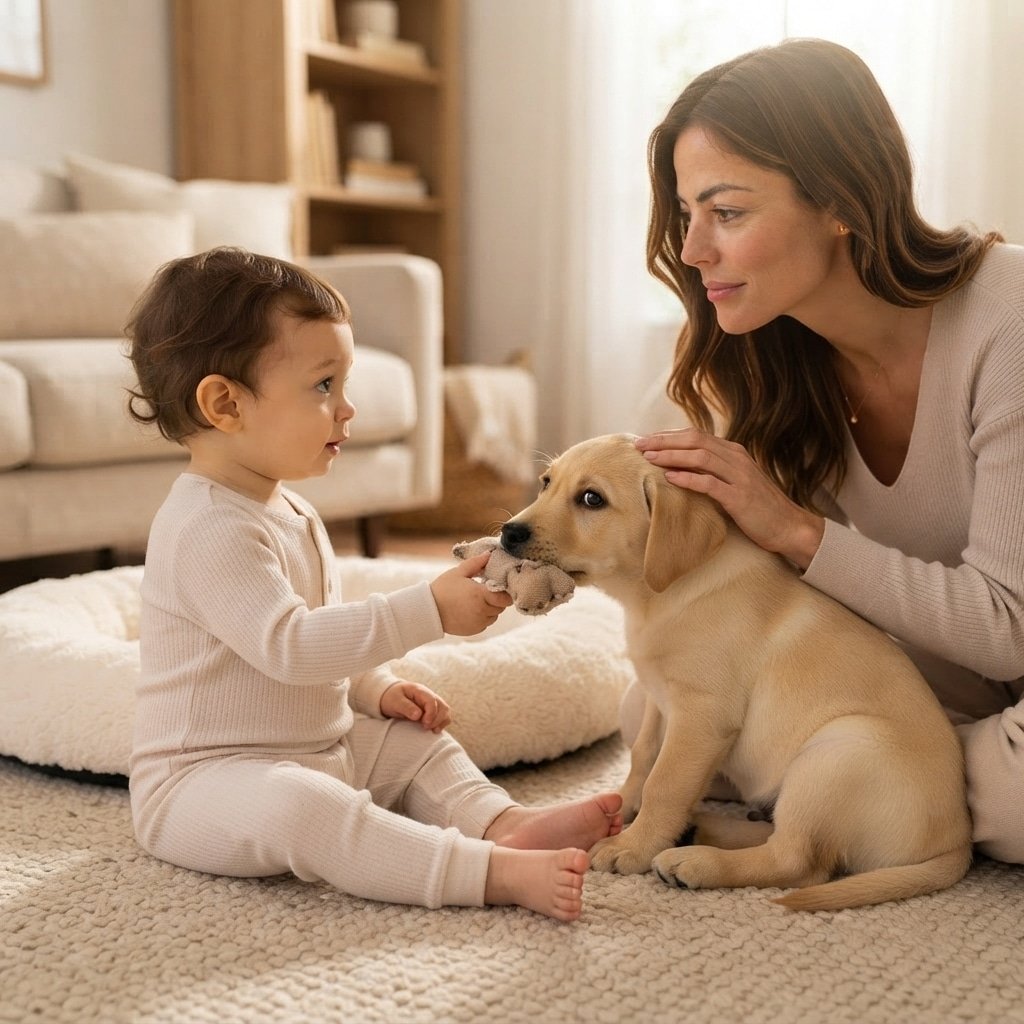
Your toddler’s just as likely to grab a toy out of the dog’s mouth as they are to guard their own from a sibling.
This particular habit is worth addressing early and specifically, separately from general gentle-touch rules.
Before the specifics:
- This isn’t about your toddler being unusually possessive or difficult. Grabbing is a normal, common toddler impulse.
- Nothing here means your dog is at fault for reacting to a sudden grab. It’s a predictable response worth preventing, not correcting after the fact.
- The goal is preventing the situation, not managing the aftermath once it’s already happened.
What’s in this guide
- Name this rule separately from general gentle-touch rules
- Watch for the setup, not just the grab
- Give your toddler their own version of asking first
- Keep high-value toys out of shared floor space
- Redirect, then reinforce, every time
1. Name this specific rule separately from general gentle-touch rules.
“Toys stay with whoever has them” is distinct enough from “soft touch” that it’s worth its own clear, repeated phrase, since a toddler who’s learned not to hit doesn’t automatically generalize that to not grabbing an object.
2. Watch for the setup, not just the grab itself.
A toddler eyeing a toy in the dog’s mouth, moving closer with clear intent, is a moment to intervene before the grab happens, not after — the earlier the redirect, the less likely either the toddler or the dog needs a strong reaction to resolve it.
A Little Support for Every Stage
Helpful checklists, guides, and resources to make each stage a little easier.
3. Give your toddler their own version of “asking first” for toys.
The same permission-based approach used for petting extends naturally here — “let’s ask if we can trade” turns a grab into a structured exchange, which is both safer and a genuinely useful skill beyond just this specific situation.
4. Keep high-value toys and chews out of shared floor space when possible.
A dog’s favorite chew doesn’t need to be part of the general toy-scattered-across-the-living-room landscape a toddler has open access to — keeping especially valuable items in a spot your toddler doesn’t reach on their own removes some of the opportunity for this to come up at all.
5. Redirect, then reinforce, every single time.
Consistency matters more here than in almost any other toddler-pet rule, since an intermittently enforced boundary around resource-guarding-adjacent situations is genuinely more confusing, for the dog especially, than a consistently enforced one.
Where this actually lands: this is a specific, common flashpoint worth its own clear rule and consistent early intervention — not a sign anything’s wrong with your toddler or your dog, just a predictable moment worth planning for.
This is one piece of the larger picture — teaching a toddler to respect the dog’s space covers the rest of what that respect looks like day to day.
This same rule of thumb — supervision over sentiment — comes up again if your toddler wants the dog sleeping in their room at night. And if the toys aren’t the issue so much as your toddler barking and crawling around like the dog does, here’s why that’s a normal phase too.