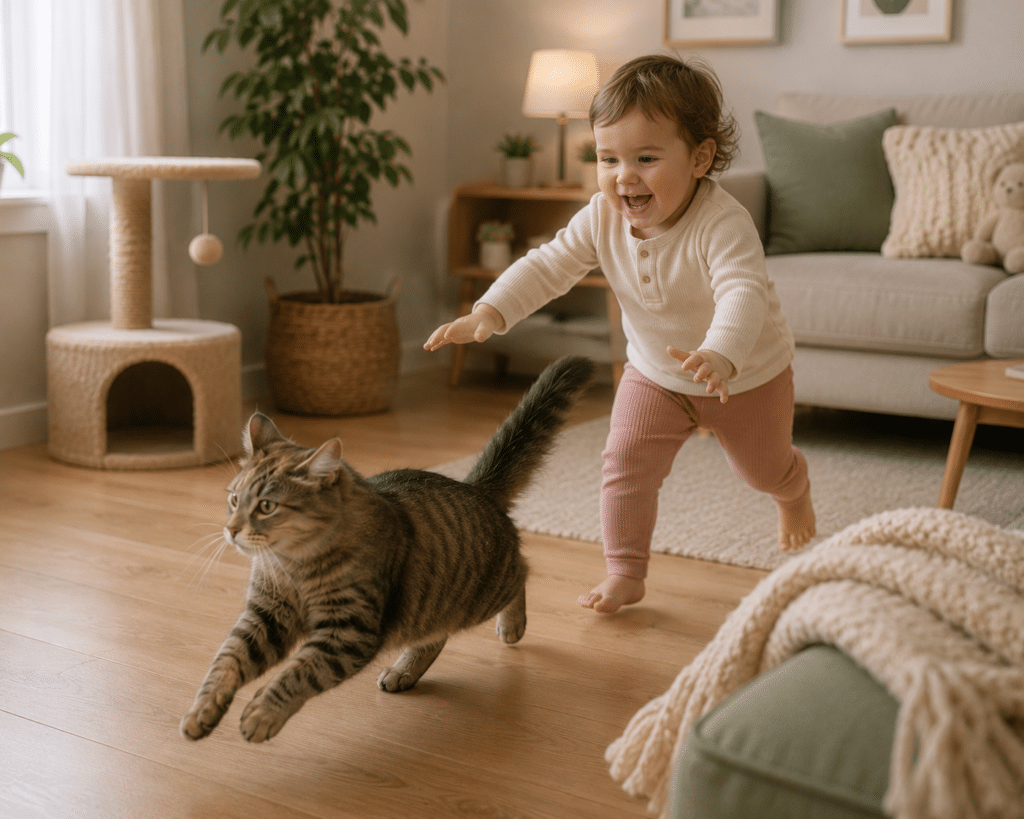
Somewhere around the same age your toddler starts wanting to “help” with everything, pet care becomes one more thing they’re eager to be part of.
Matching the task to what they can actually handle keeps it genuinely useful, not just supervised busywork.
Before the list:
- This isn’t about assigning real chores in a formal sense. It’s about structured ways to include your toddler that actually fit their current ability.
- Nothing here should feel like pressure to involve your toddler in tasks they’re not ready for or interested in.
- The goal is building a positive association with pet care, not extracting real labor from a two-year-old.
What’s in this guide
- Around 2 to 3: fetching, not handling
- Around 3 to 4: pouring and filling
- Around 4 to 5: brushing, under supervision
- Around 5 to 6: simple feeding steps
- Praise the participation, not just the outcome
1. Around 2 to 3: fetching, not handling.
Bringing a specific item to you — the leash, a toy, an empty bowl — is well within reach at this age, and it gives your toddler a real sense of contribution without requiring any actual handling of food, water, or the pet directly.
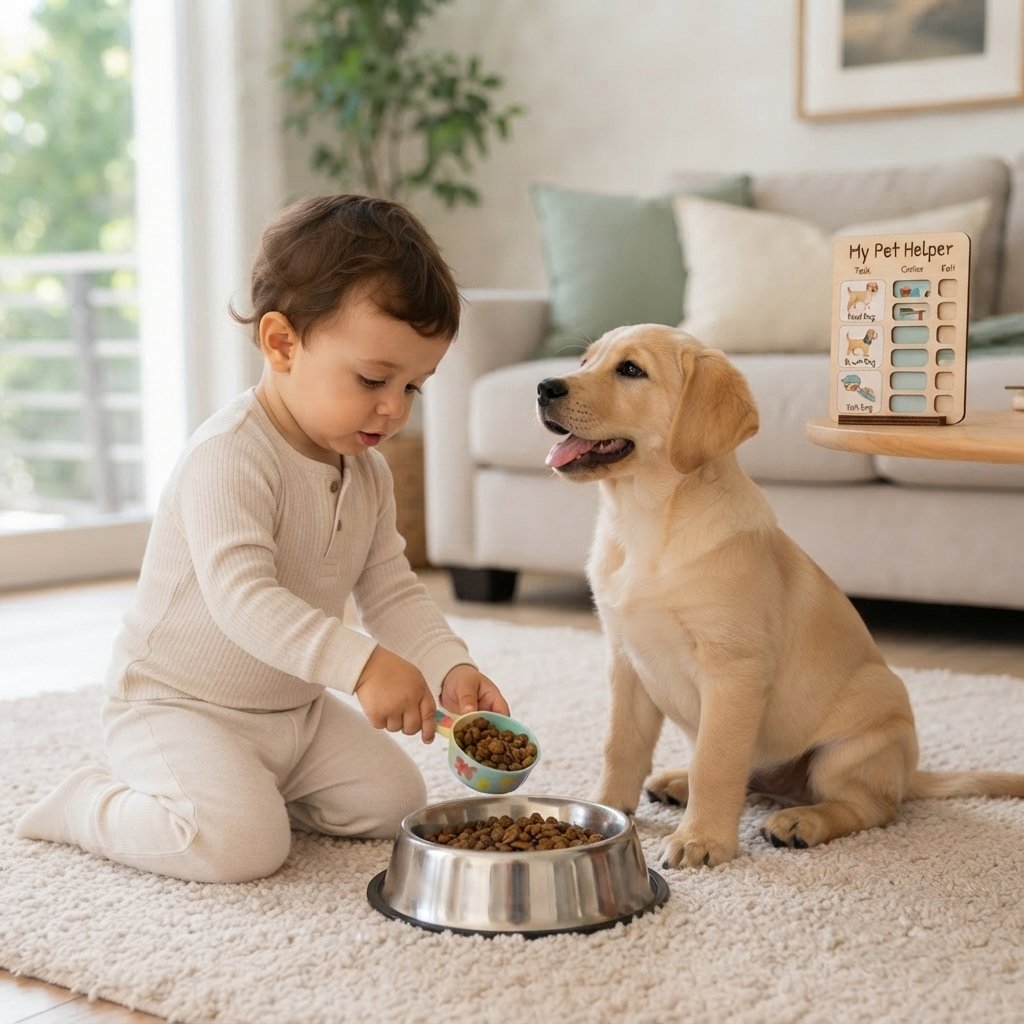
2. Around 3 to 4: pouring and filling, with you right there.
Scooping food into a measuring cup or refilling a water bowl, always with an adult present and the actual placement of anything near the pet still handled by you, matches this age’s growing fine motor skills without asking for more independence than they’ve actually got.
A Little Support for Every Stage
Helpful checklists, guides, and resources to make each stage a little easier.
3. Around 4 to 5: brushing, under close supervision.
A calm, cooperative pet and a soft brush, with an adult guiding the actual motion, introduces gentle physical care in a low-risk way — this is also a good moment to reinforce reading the pet’s body language, since brushing offers a clear, calm setting to practice noticing comfort versus discomfort.
4. Around 5 to 6: simple, supervised feeding steps.
This is roughly the age range where placing the actual bowl down, with an adult still present and watching closely, becomes reasonable for many families, building on the scooping and pouring skills already established over the previous couple of years.
5. Ongoing, at every age: praise the participation, not just the outcome.
Genuine enthusiasm for a wobbly, imperfect job of filling the water bowl does more for building a lasting positive association with pet care than correcting the technique does — the goal at every stage is enjoyment and connection, not precision.
Where this actually lands: pet-care involvement can grow steadily alongside your toddler, starting well before they’re capable of much actual handling — the fetching and pouring stages matter just as much as the later ones, since they’re what build the foundation for everything after.
Feeding is one of the chores that grows the most with age — here’s exactly where the line sits for the bowl-down moment specifically.
We'd love to
hear from you.
Have a question, a tricky moment you're navigating, or a story worth sharing? This is a two-way street — we're always listening.
💌 Get in Touch